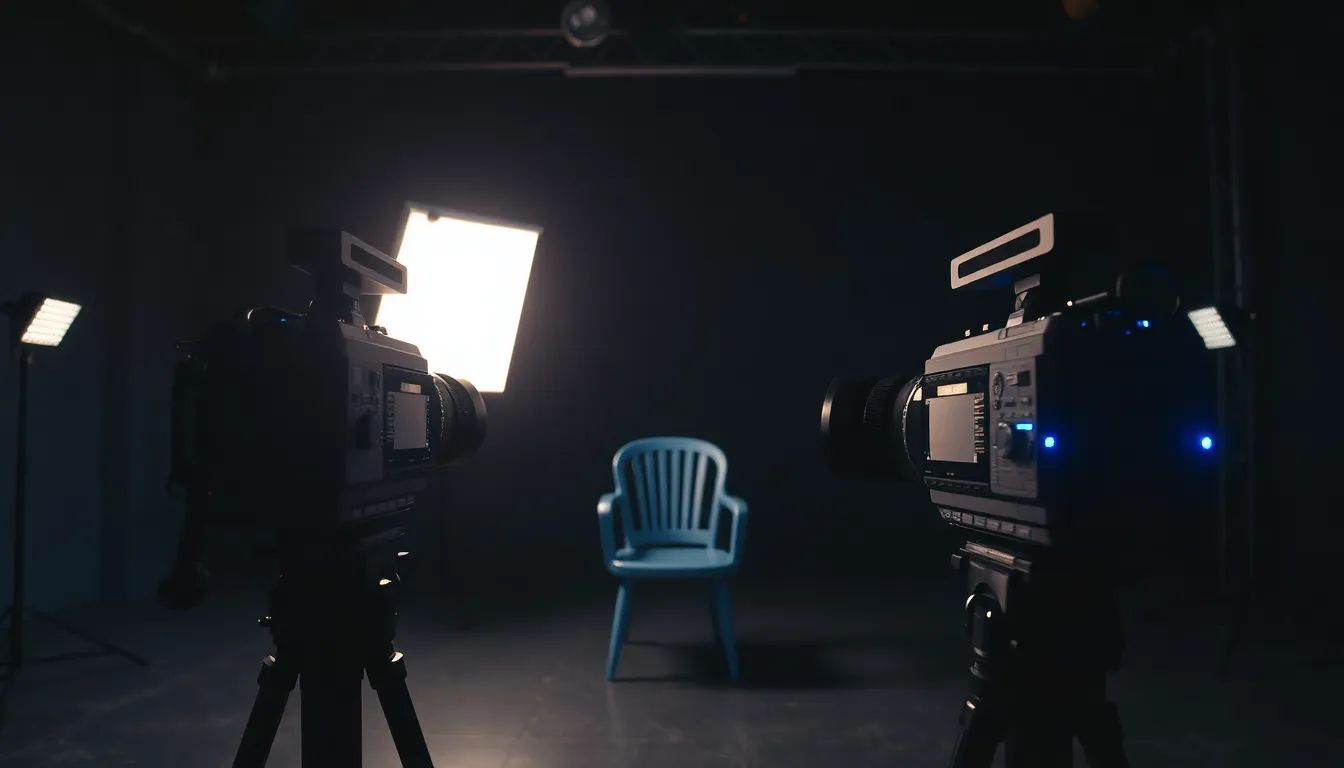
If you have ever watched a corporate interview that cut between two camera angles and felt something was off without being able to say what, you were probably looking at a violation of the 30-degree rule. It is one of the oldest principles in multi-camera filmmaking and one of the most commonly broken by crews who treat their second camera as an afterthought.
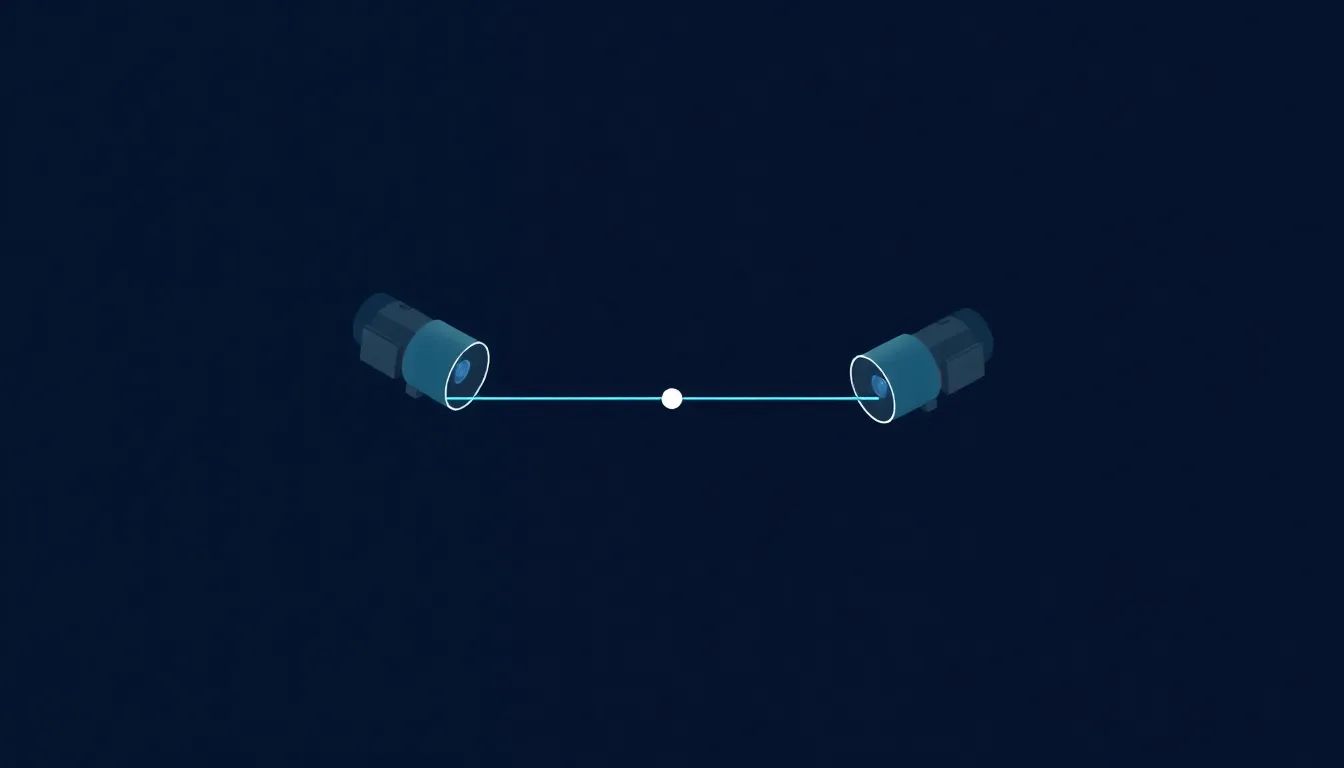
The rule itself is simple. When you set up a second camera filming the same subject, the angle between the first camera and the second must be at least 30 degrees. Below that threshold, the two shots look almost identical to the audience. The cut between them does not feel like a meaningful change in perspective. It feels like the editor made a mistake.
What the audience actually sees in a bad cut
Watch any seasoned editor describe a jump cut and they will mention the 30-degree rule somewhere in the explanation. The audience does not consciously notice angle measurements. What they notice is that the subject seems to jump slightly from one frame to the next. The brain expects either no change (a single continuous shot) or a clear change (a new perspective). The 30-degree minimum is the threshold that registers as a clear change.
If your two cameras are 10 degrees apart, the cut looks like a mistake. If they are 60 degrees apart, the cut looks intentional. Somewhere around 30 degrees is where the audience stops reading the cut as a glitch and starts reading it as a deliberate edit. The exact threshold varies by subject and shot composition, but 30 degrees is the rule of thumb every multi-camera crew should know.
Why the rule gets broken on corporate shoots
Most corporate shoots have one of two failure modes. The first is the assumption that both cameras are good enough on their own. Crews who think this way will park camera A on a tripod facing the subject head-on, and camera B at a slight angle from the same direction. The angles between them might be 8 to 15 degrees. Every cut between them is going to feel wrong, and the editor will spend hours trying to disguise the problem in post that should have been solved on set.
The second failure mode is running out of time. The first camera was set up properly. The second camera was added near the end because someone realised the edit would benefit from coverage. With no time to think about geometry, the operator places it wherever fits and hopes for the best.
Both failure modes are visible in the final edit. Once you know what to look for, you can spot a 30-degree violation on the first cut. The fix in post is limited to zooming or reframing one of the angles, which compromises the image quality and the original composition. The real fix is upstream: a 30-second conversation between the director and the second camera operator before either camera rolls.
How a good crew positions a second camera
A well-positioned second camera does three things at once. It sits at least 30 degrees off the primary camera. It captures a different focal length or framing than the primary, so a wider context shot if the primary is a tight close-up, or vice versa. And it gives the editor a reason to cut to it beyond simply having an alternative angle.
For a single-subject interview, a common arrangement is the primary camera at a slight three-quarter angle from the subject's left, and the secondary at a wider 60-degree angle from the right. The first shot reads as the audience addressing the subject. The second reads as an observer noticing the subject from another perspective. The cut between them is editorial, not accidental.
For a two-person dialogue, the same rule applies but multiplied across both subjects. Each camera should be at least 30 degrees off the line between the two speakers, so cuts between speakers feel like the audience turning their head rather than a glitch. The 180-degree rule (the related principle that both cameras should stay on the same side of the action line) reinforces this. A crew that knows the 30-degree rule almost always knows the 180-degree rule too.
When the rule is worth breaking
Like any rule in filmmaking, the 30-degree rule has a deliberate exception: the intentional jump cut. Music videos, video essays, and a certain style of YouTube editing use sub-30-degree cuts on purpose to create energy. The cut is meant to feel jarring. The audience reads it as a stylistic choice because the rest of the edit signals that this is meant to be punchy.
Outside that intent, a sub-30-degree cut is a mistake. In corporate film, brand work, and interview-driven content, the rule should be observed. The audience is expecting a polished, considered piece of communication. A glitch reads as carelessness.
How to brief this without sounding like a film school dropout
You do not need to mention the 30-degree rule by name when commissioning a multi-camera shoot. The simpler version is to ask that the second camera looks like a different shot, not a slightly-moved version of the first. Any director worth hiring will know exactly what you mean, and the conversation will move forward.
The signal that a crew does not know this rule is when their portfolio includes interview edits where the two-camera cuts feel slightly off. The mistake is recoverable in post by zooming or reframing, but the better fix is upstream: hire crews who plan their geometry before they roll camera.
What this means when you commission a multi-camera shoot
The 30-degree rule is one of those production details that the audience never thinks about consciously but always feels. When it is followed, the edit feels effortless. When it is broken, the audience knows something is wrong without being able to articulate it. For corporate films and brand work, multi-camera shoots are a significant cost line. This is one of the simplest tests for whether that cost is being well spent.
DHP runs corporate video production on the assumption that every continuity rule (the 30-degree rule, the 180-degree rule, the 60-degree shift on reverse angles) is observed by default, not as an afterthought. When the rules are observed, the audience never sees the technique. They just see the message. That is the point.