The marketing team plans a 50-year anniversary film for a regional industrial group. The founder is gone. The early-decade photographs are grainy. The live shoot of current operations looks no different from any other corporate b-roll. The retrospective draft comes back from the executive committee with one note. It is fine. It is also forgettable.
Some milestones outrun what live action can carry on its own. For institutional anniversaries where the symbolic register matters as much as the chronology, 3D-built thematic worlds become the medium the moment is actually asking for. Dustin Hill Productions designs the entire film as a navigable 3D environment, with the brand's chosen motif as the carrier of the whole argument.
Why the live-action retrospective often falls short at the symbolic register
The default brief for an anniversary film is the retrospective. Pull the photo archive, license old broadcast footage, intercut current b-roll, lay a voiceover over the top, and end on the founder's quote. The result is competent. It is also indistinguishable from every other anniversary film the audience has seen.
The problem is not the live action itself. The problem is the register. An anniversary is a ceremonial moment. The audience arrives expecting something that honours the occasion. A standard live-action retrospective treats the milestone as content to be reported. The room wants the milestone to feel marked.
3D-built worlds reach that register because they are not bound to literal documentary. A film about a half-century institution can show its decades as a single 3D environment the audience moves through, with each era carrying its own visual atmosphere, lighting, and emotional weather. That is something a live shoot of the current building cannot do, regardless of how skilled the cinematographer.
What thematic world means in this context
A thematic world is the visual environment the entire film inhabits. Not a backdrop. Not a setting for one shot. The world is the film. The camera moves through it, the audience moves through it with the camera, and the milestone's meaning is carried by the world's design as much as by the voiceover.
For a financial services group celebrating a regional milestone, the thematic world might be a vast architectural space whose proportions shift as the decades advance, growing from a modest single-room office at the start to an interconnected continental footprint by the present day. For an energy company commemorating its founding charter, the thematic world might be a layered geology, where each era's strata are visible and each era's defining technologies sit embedded in the rock as accumulated history. For a healthcare institution honouring a half-century of practice, the thematic world might be a luminous interior space where light volumes carry decades of memory in suspension.
In each of those, the world is not chosen at random. The motif is chosen to carry the brand's own argument about what the milestone means. Dustin Hill works that argument out with the marketing or comms lead first, then designs the world to express it. The world should feel inevitable in retrospect, even when it took weeks to choose.
Choosing the motif as the carrier of the brand argument
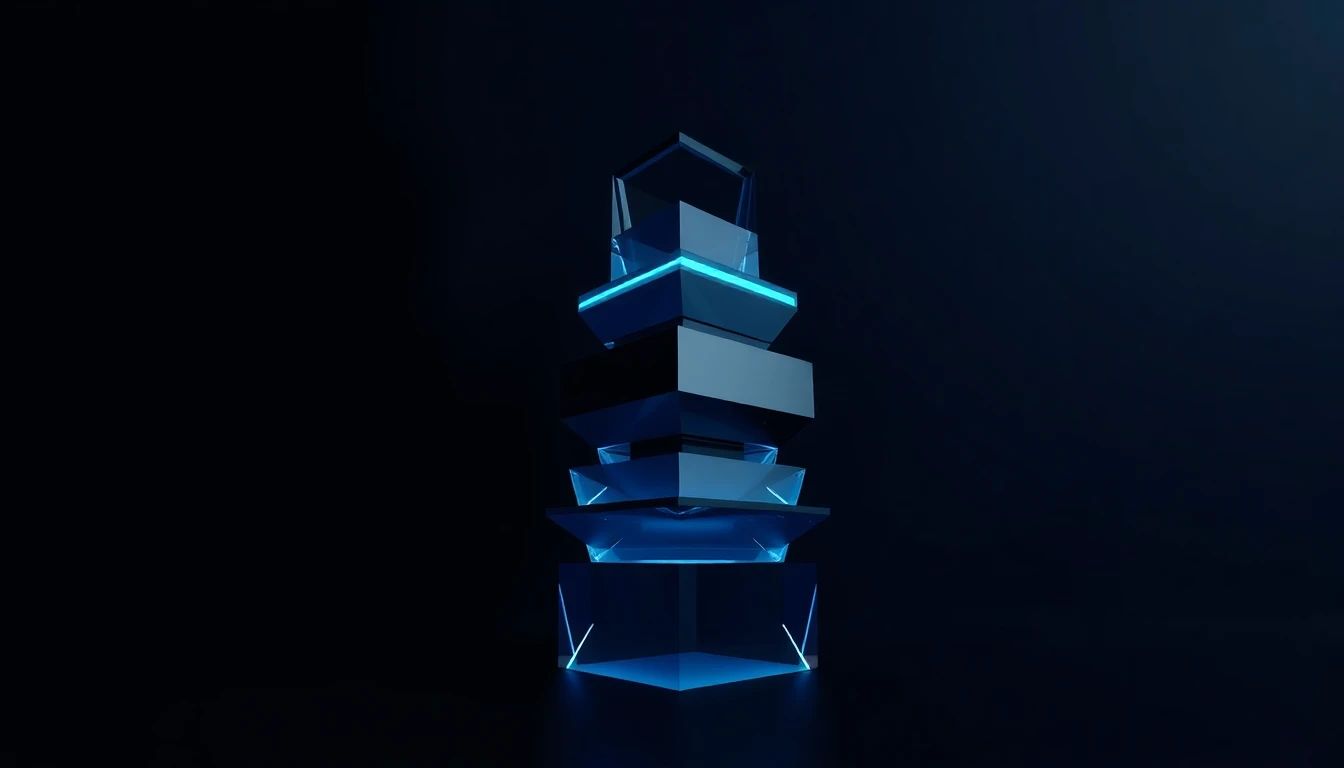
The motif is the central object or environment the world is built around. Crystals and gems for institutions whose value proposition rests on rarity and concentration. Architectural spaces for organisations whose milestone is about footprint and scale. Light and luminous volumes for institutions where the milestone is about illumination of a field. Cosmic or stellar scale for organisations whose milestone is about reach or constellation effects. Layered earth and geology for ventures whose milestone is about depth and accumulation.
The motif is also the answer to one practical question. What single visual element can the audience hold in their head for the rest of the year? An anniversary film that lands a single image as the brand's symbolic carrier outperforms a film that flickers through many. The motif is the image that does the holding.
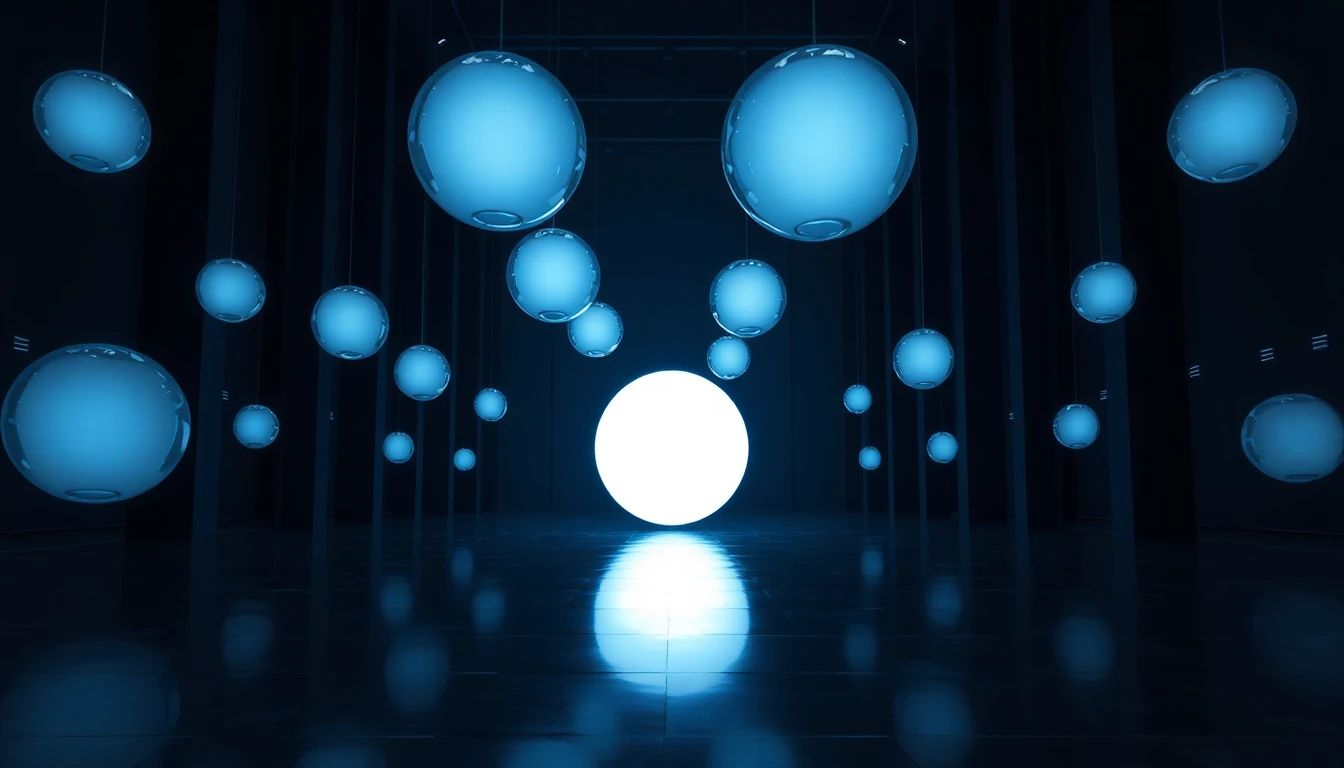
For a global pharmaceutical group commemorating decades of clinical work, a recurring motif of luminous glass spheres can carry the film's emotional weight across every section. For a regional infrastructure operator marking a charter milestone, a recurring motif of interlocking bridges can carry the same load. The motif does the carrying so the voiceover does not have to.
How archival content sits inside a 3D world
Most institutions arriving at an anniversary milestone have years or decades of archival content sitting in storage. Old photographs. Broadcast footage from press launches. Founder portraits. Internal video from training days. Most of it never makes it into the final film because the standard intercut approach makes archival material feel like a slideshow.
Inside a 3D-built world, archival content can sit inside scene elements instead of being intercut against them. A photograph from a founding decade glows from within a glass sphere as the camera passes. A broadcast clip from a turning-point year plays inside a window suspended in the architectural space. The audience reads the old material as memory, not as a flashback cut. The integrity of the original content is preserved. The film treats it with the weight the institution gives it.
This is its own technique, with its own production decisions about which scene elements host which archive moments. A later article in this series covers that pipeline in depth. For the anniversary brief itself, what matters is that archival material has a place to live inside a 3D world without the film losing its visual cohesion.
The production cycle for a 3D-built anniversary film
3D-built anniversary films take longer than live-action retrospectives. The cycle is also more layered. Dustin Hill plans the production around four phases that the buyer can review at each step.
Phase one is the motif and world design. The marketing or comms lead reviews the central motif, the world's visual atmosphere, and the era-by-era visual evolution if the film spans multiple decades. Approval here locks the world's identity.
Phase two is the storyboard. Every panel of the film is drawn. The camera path through the 3D world is laid out shot by shot. The audience experience is approved on illustrated stills before any rendering compute begins.
Phase three is the 3D build and animation. Modeling, texturing, lighting, and animation all happen against the locked storyboard. Renderings are reviewed in passes, with internal sign-offs at the equivalent of dailies.
Phase four is the audio bed, voiceover, and master delivery. Music score and sound design get committed once the visuals are picture-locked. Voiceover is recorded against the final picture. The master file is delivered in the format the venue requires.
The phased structure is what makes 3D-built anniversaries survive the internal sign-off process at an MNC or institution. The board does not see a finished render until the world's identity, the storyboard, and the animation passes have all already been approved at the right altitudes.
Where the film actually plays, and how that shapes the brief
The same 3D-built anniversary film often plays in several contexts. The flagship gala on the night of the celebration. A reduced version on the corporate channel for staff. A further-reduced version on the public brand channel. A teaser cut for social. Each of those contexts changes the brief.
The flagship gala asks for the full 3-to-5 minute cinematic master, optimised for a large venue stage screen, often at a non-standard aspect ratio. The corporate channel asks for the same film at 16:9 with a different audio mix. The public brand channel asks for a 90-second cut that preserves the world's identity but lands faster. The social teaser asks for a 15-second moment from the film that works without sound.
Dustin Hill plans the deliverable set into the brief on day one. The 3D world is built once. The cuts and resolutions are versioned out from the single master. The buyer ends the project with a complete cross-channel set, not with a gala film that has to be re-cut later under deadline pressure.
An anniversary is one of the few moments where a brand has the licence to be ceremonial in public. The buyer who plans the film as a 3D-built thematic world is using that licence on purpose. The result lands at the gala, it carries on the brand channel, and it survives in institutional memory as the marker the milestone deserved.
For 3D animation and visualization at Dustin Hill, the anniversary briefs that land most often are the ones where the milestone matters more than the chronology. We start by working out the brand's argument about the milestone, design a world that carries it, and storyboard the entire film before any rendering begins. By the time the master is delivered, the world feels inevitable, the milestone feels marked, and the institution has a film its people will reference for years.
The tribute film plays at the gala, and the gala itself is usually worth filming too. That coverage is corporate event video production, and booking it alongside the tribute film puts the night and the film it was made for into the same edit.