An institution arriving at a milestone year usually finds a basement full of legacy media. Old photographs in folders. Broadcast clips on tape. Promotional reels from product launches a generation back. Founder interviews on early video formats. The marketing team wants the material inside the anniversary film. The director cuts the obvious way, intercutting old footage between contemporary shots, and the result feels like a slideshow inside what was supposed to be a film.
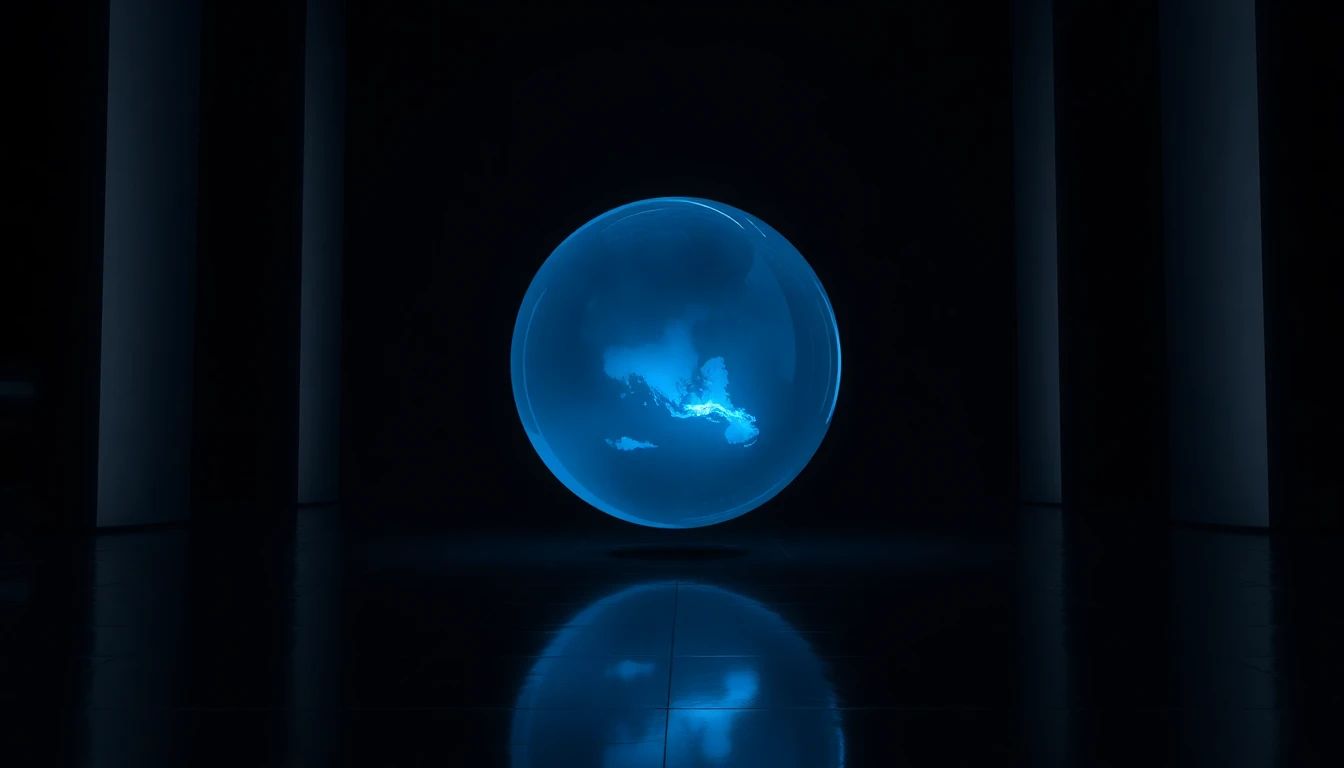
The alternative is to embed the archival material inside 3D scene elements. A photograph glows from within a glass sphere. A broadcast clip plays inside a suspended window. A founder portrait inhabits a luminous orb the camera passes near. The audience reads each piece of archive as memory the film is inviting them into, not as a flashback the editor has stitched in. Dustin Hill Productions builds this composite as its own animation discipline, with its own production decisions.
Why straight intercutting flattens the emotion
Intercutting works for documentary. It works when the audience expects to be moved between past and present quickly, and the cut itself is a narrative tool. Anniversary films almost never want that effect. The audience is in ceremonial mode. The film is supposed to feel held together, not stitched.
A hard cut from contemporary b-roll to a historical photograph asks the audience to do the work of bridging. The bridge happens, but at the cost of emotional continuity. By the third cut, the audience has stopped reading the archive as part of the same world as the modern footage. It feels added on. Worse, the archival quality difference, lower resolution and different colour science and period grain structure, becomes its own visual interruption rather than a deliberate texture.
The pensieve frame, where archival content lives inside a 3D scene element rather than beside it, removes that interruption. The old material now belongs inside the world the film has built. The audience does not bridge across a cut. They lean in toward an object.
The pensieve frame as a category of compositing work
The term is borrowed from a familiar fiction. In a pensieve frame, a contained surface or volume inside a 3D scene plays archival content. The container has its own materiality, its own light, its own sense of being an object in the scene. The archival content inside it carries the memory. The two read as one moment, not as cut and content.
As a category, pensieve frames cover several specific techniques. A reflective glass sphere with archival footage projected onto its interior face. A suspended luminous orb that glows with a moving image inside. A pool of mirrored water whose surface ripples around a playing video. A mirrored object whose reflection holds the archive rather than the scene around it. Light volumes shaped like prisms whose internal faces carry historical photos.
Each technique handles different content well. Reflective spheres flatter portrait photography. Luminous orbs carry short video clips at low resolution because the orb's own light masks the quality difference. Mirrored water surfaces work for ceremonial moments like ribbon cuttings or product launches. Light prisms suit institutional photography that wants to be read as document. The choice depends on the era of the source material and the emotional register the moment is asking for.
Choosing the scene element to host each archive moment
The pairing decision happens at the storyboard stage. For each archival moment the film wants to include, the storyboard panel specifies which scene element will host it. The host element is sized and positioned in the 3D world so the audience's eye is led to it naturally. The element's material properties are chosen so the archive content reads cleanly inside.
For a financial services anniversary, a broadcast clip of a founder addressing an analyst day might sit inside a polished obsidian sphere on a marble pedestal in the centre of the 3D world's main hall. The sphere's reflective surface frames the period footage and the audience reads it as institutional history rather than as a cutaway.
For a healthcare institution's half-century film, a photograph of the first clinical team might sit inside a luminous orb suspended in the 3D world's open atrium. The orb's internal light renders the photograph readable at distance, and the orb's slow rotation gives the still image enough motion to feel alive inside the 3D scene.

For an industrial group's 75-year retrospective, a series of broadcast clips from across the decades might play in succession inside a row of vertical light prisms standing in the 3D world's central plaza. The audience walks past them one by one, each prism marking an era, the prisms themselves arranged in chronological order.
Preparing the archival material for 3D compositing
Archival content rarely arrives ready to drop into a 3D scene. Old broadcast footage is in low resolution, often interlaced, and graded for tube televisions. Photographs from before the digital era are scans of prints, sometimes with damage. Super 8 reels have their own grain and gate weave. Each format needs a pass of preparation before it goes inside the host scene element.
Dustin Hill's prep pipeline includes resolution upscaling, deinterlacing for broadcast content, colour science conversion to the project's master colour space, restoration of physical damage on photographic scans, and stabilisation on hand-shot footage. The aim is not to make old footage look modern. The aim is to make the period quality readable inside a scene element designed to host it.
Period grain, scratches, and authentic colour science are retained where they read as texture. The host scene element is then designed around what the archival material can support. A luminous orb that masks resolution differences hosts low-resolution broadcast clips well. A flat mirrored surface that exposes resolution differences hosts high-resolution photographic content only.
Animating the entry and exit
How the camera enters and exits each pensieve frame is its own animation problem. The audience needs to be drawn toward the host element, then released from it, without the rhythm feeling mechanical.
The standard approach is to lead with a camera move that pulls the host element into focus from the wider 3D scene. The element's internal content fades up as the camera approaches. The audience reads the archive material at the moment of greatest visual focus. Then the camera pulls back, the element falls into the background, and the next 3D scene beat takes over.
For ceremonial films, the entry and exit pacing is slower. The audience is given time to read each archive moment. The camera lingers. The 3D environment's ambient motion continues at low amplitude underneath. The cumulative effect is closer to a procession than a montage.
For films with a brisker tempo, multiple host elements can be linked into a continuous camera path that visits each in turn. The camera passes through a row of pensieve frames in a single sustained move. The pacing is faster but the emotional continuity is preserved because nothing cuts. The audience never leaves the 3D world.
Where this technique fits in a longer film
Pensieve frames are not a structure for an entire film. They are a technique used inside a larger 3D-built world that has its own architecture, its own pacing, and its own contemporary content. A full anniversary film might use four to six pensieve frames across a five-minute master, each one carrying a single archival moment that anchors a section of the broader argument.
The film around the frames carries the present-day content, the brand's current operations, and the forward-looking thesis. The frames carry the institutional memory. The interaction between the two registers, present-day 3D world and archival memory inside it, is what gives the film its specific emotional weight. Without the frames, the film feels modern but rootless. Without the present-day 3D world, the frames feel like a slideshow with frames on it. Both are required.
Most institutional anniversary films have material that deserves better treatment than an intercut. Photographs that carry the weight of an era. Footage that captured a founding moment. Portraits of people the institution will not see again. The pensieve frame technique is not a flourish on top of a film. It is what allows the film to honour those moments with the dignity the audience already feels toward them.
For animation work at Dustin Hill, this technique surfaces most in anniversary films and founder commemorations, alongside institutional milestone moments where the archive itself is what the film has to honour. We design the host scene elements around the specific material. The archival content gets prepped for 3D compositing in parallel. The entry and exit of each frame are storyboarded before any rendering begins. The result is a film where the past lives inside the present-day world the film has built, and the audience reads both as one continuous moment.
Compositing is what makes a hybrid read as one film. The case for choosing a hybrid in the first place sits in the comparison between 3D animation and live action.