A corporate video moves through five stages at Dustin Hill Productions, and you have a defined job at each one. Most of it is deciding things that only someone inside your organisation can decide.
That puts more of the schedule in your hands than it looks. The pace of a corporate film is set less by how fast a crew can shoot and edit than by how quickly decisions get made, and decisions are the part you can plan for from the first conversation.
What are the stages of corporate video production, and what does the client do at each one?
Corporate video production at Dustin Hill runs in five stages: brief and script, storyboard and approval, shoot, edit, then review and delivery. Every stage gets your review before the next one starts, and each has a defined job for you, from naming the goal at the brief to approving the final cut. The table sets out what Dustin Hill does and what you do or decide at each stage.
| Stage | What Dustin Hill does | What you do or decide |
|---|---|---|
| 1. Brief and script | Asks the opening questions, proposes a treatment, writes the script | Name the goal, audience, approvers and deadline; review the script |
| 2. Storyboard and approval | Draws every panel of the film before any camera rolls | Take it to your internal reviewers and approve it before the shoot |
| 3. Shoot | Directs and films to the approved storyboard, protecting executive time | Provide access and people; settle brand questions as they arise |
| 4. Edit | Assembles to the storyboard, then finishes with colour grading and sound design | Name one person to own feedback on your side |
| 5. Review and delivery | Runs two structured rounds, then delivers the master and cut-downs | Send one consolidated set of notes per round; approve the final cut |
The shoot itself is often a single day, and most of the calendar is planning and approval, so how long each stage takes depends on the film and on how quickly decisions come back. How long a marketing video takes to make in Singapore shows where that time goes. Cost follows the same stages, and what a corporate video costs in Singapore is easier to read once you can see which stage each line of a quote belongs to.
The brief that arrives without a script
Most corporate video projects come to Dustin Hill at the brief stage, not the script stage. The marketing or comms team has decided why the film exists. They have a budget envelope. They have a deadline tied to a campaign launch, an event, a leadership message, or a regulatory disclosure window. They do not have the script, the shot list, the casting plan, or the location strategy.
Script and creative direction sit inside the production scope at Dustin Hill, so nobody has to arrive with them finished. The first conversation is about the audience and what they should take away, and from that we propose a treatment. The treatment becomes the basis for the script, and the script becomes the basis for the storyboard.
What you bring to the brief fits on a page. A studio can quote and schedule accurately once it knows the goal, the audience, the approval chain and the deadline, and a video brief template walks through each of those with a worked example.
The storyboard before the shoot
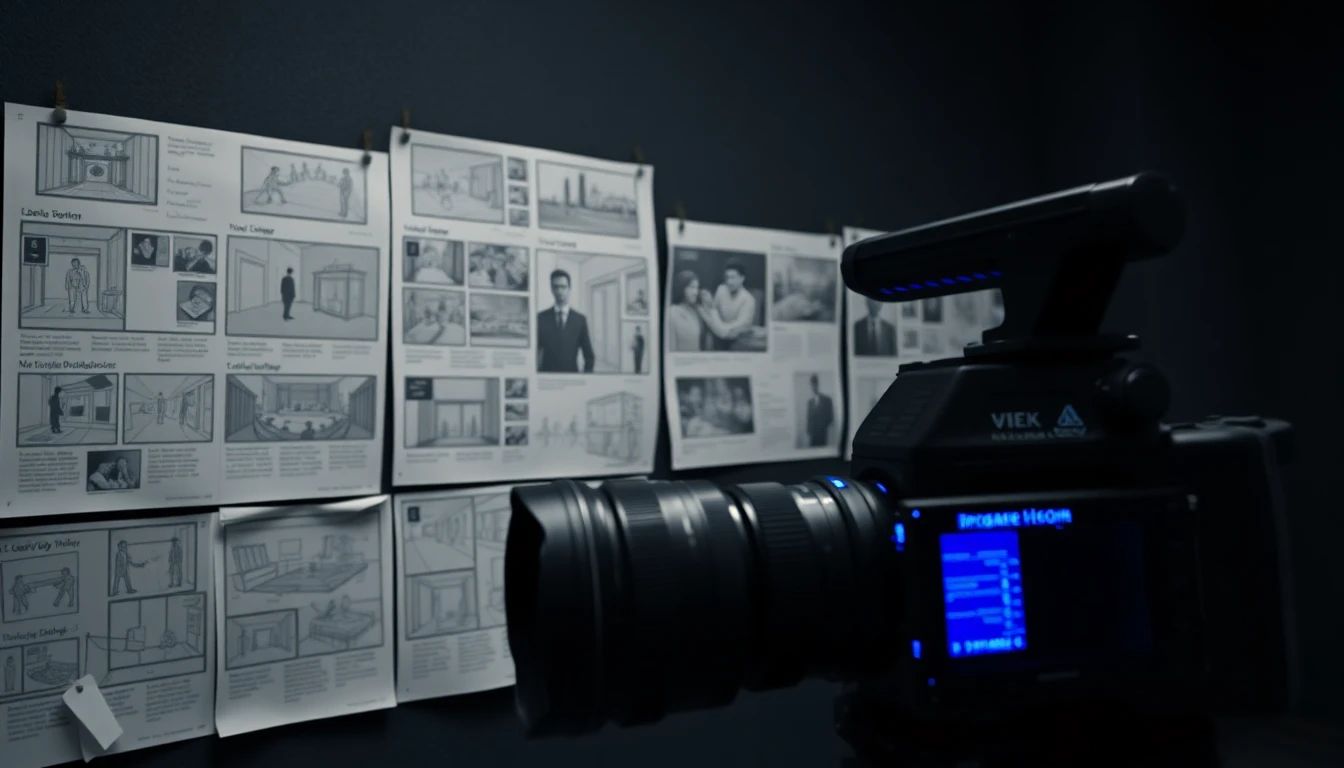
The storyboard is the stage that most sets Dustin Hill's process apart. We draw every panel before we film, so you see the whole film as an illustrated sequence before any shoot day is locked. Why we storyboard every shot before we film it lists what each panel fixes in advance.
This is where you approve. You can take the storyboard to every internal reviewer, from the brand custodian to leadership, before a camera turns on, and anything that needs to change is changed on paper, where it costs a redrawn panel instead of crew and equipment time.
The internal calendar of an MNC is the real driver here. The storyboard collapses the multi-stakeholder review into a single phase you can run on your own time and with your own people, before the production budget starts burning down. The work before the crew arrives is what the industry calls pre-production, and what happens in pre-production explains why that phase shapes the rest of the project.
Production day, and who is on set
On a standard Dustin Hill shoot day, the set is run by the same director who walked through the storyboard with you, and every department works from that storyboard. Nobody is seeing the film for the first time.
A corporate shoot behaves differently from a commercial one. Talent is often a senior executive with limited time, and locations are often live offices or facilities where the production has to coexist with normal business operations. For sensitive locations such as clean rooms or trading floors, Dustin Hill coordinates compliance and access well ahead of the shoot day.
Dustin Hill plans for this. We arrive with a shot list built around your day as well as the cinematography, and we protect executive time. We leave the set in better condition than we found it.
On the day, your job is access, approvals and people. Someone with authority needs to be reachable within a few minutes when a question about brand or access comes up, and the crew handles the rest. What happens on a corporate video shoot day covers why filming starts later than the call time and where a day most often slips.
The edit cycle, scoped at the brief stage
After the shoot, the footage is assembled to the storyboard and finished with colour grading and sound design. The first cut then comes to you for review, and this is where an approval chain either holds a schedule together or stretches it. One named person who owns feedback, and one consolidated set of notes per round, keep each round moving.
Most corporate video projects at Dustin Hill run two structured revision rounds. Round one is comprehensive and covers pacing, music, voice-over and shot decisions. Round two is tightening, with notes on specifics.
What makes two rounds enough is that the big decisions were made together at the storyboard stage. The buyer is not seeing the structure of the film for the first time in round one. They are seeing how the structure landed in execution. That moves the conversation from is this what we wanted to what would make this better. It is a faster, more focused review process for an MNC marketing team that has limited cycles to spend.
For projects with larger stakeholder groups, we scope extra review rounds at the brief stage rather than absorb them mid-production, so cost and timeline stay visible and extra rounds do not turn into one of the hidden costs that surface after the quote.
Getting a corporate video through legal and stakeholder review sets out what legal and your other reviewers look for, and which of those checks can be closed before the shoot. Once you approve the final cut, the files are delivered.
Multi-channel delivery as a designed outcome
A modern corporate film delivers a master plus a set of cut-downs sized for every channel the campaign needs. Horizontal 16:9 for YouTube and embeds. Vertical 9:16 for stories and reels. Square 1:1 for feed. Captioned versions for accessibility and silent autoplay. Language masters where the campaign goes regional. Internal versions where the message has to read differently for staff than for customers.
We plan the cut-downs alongside the master from the brief stage. Vertical framing is considered during the shoot rather than retrofitted in the edit, and subtitle pacing is built in from the start. You decide at the brief stage where the film will run, and the delivery package that comes back drops into your channel plan without in-house re-cutting.
For LinkedIn in particular, how long a corporate video should be on LinkedIn sets out the length that fits each job, from a 15-second ad to a company page film.
The asset library at the end of the project is the part that determines whether the film has a long life or a short one. We design for the long life.
What one accountable thread changes
Dustin Hill runs the five stages as one accountable thread, with one team from the first conversation to the final master. The difference shows when something has to change, such as a revised brand message after the shoot or a regulatory note that needs a callout, because the change ripples across the master and the cut-downs through one set of decisions.
The alternative, a separate vendor for each stage, is a project management role the marketing team usually has to fill itself. Dustin Hill takes that role on, so you manage outcomes and the team manages the chain.
Run well, the five stages bring you to launch day with a film that everyone who needed to approve it has already seen in pieces. If you have a brief in mind, corporate video production at Dustin Hill starts with a short conversation about what the film has to do. No pressure, just a clear look at what's possible.
Bid work runs through the same chain. When a proposal needs a tender or pitch video behind it, the brief is a section of the written submission and the deadline is the submission date, so the chain runs to that date.
Frequently Asked Questions
How long does the corporate video production process take?
A fully developed corporate video runs four to eight weeks from the first conversation to final delivery, and a short, focused social or explainer piece can be ready in one to two weeks. The shoot itself is often a single day. Most of the calendar goes to planning and approvals, and a schedule should allow at least a working week for each round of internal review, so a fixed launch date is worth sharing in the first conversation.
Do we need a script before we brief Dustin Hill?
No. Most projects arrive as a goal and a deadline, and Dustin Hill treats the script and creative direction as part of the production scope. If you already have a script, it becomes the starting point for the storyboard. Share what you have, even half-finished, and Dustin Hill will tell you what is still missing.
When do we see the film for the first time?
Before anything is filmed. The storyboard shows the whole film as an illustrated sequence, panel by panel, and you approve it before a shoot day is locked. Every stage gets your review before the next one starts, so by the time the first cut arrives you have already seen the idea and are checking how it landed.
How many revision rounds are included?
Two structured rounds. Round one is comprehensive and covers pacing, music, voice-over and shot decisions, and round two is tightening, with notes on specifics. Most clients land in two rounds because the big decisions were made at the storyboard stage. For larger stakeholder groups, extra rounds are scoped at the brief stage so cost and timeline stay visible.
What do we receive at delivery?
A master file in your delivery spec and cut-downs sized for each platform you named at the brief, with captioned versions for accessibility. Where the campaign goes regional, subtitled or dubbed language versions are added. The full list is agreed at the proposal stage, so nothing in post-production becomes a surprise.