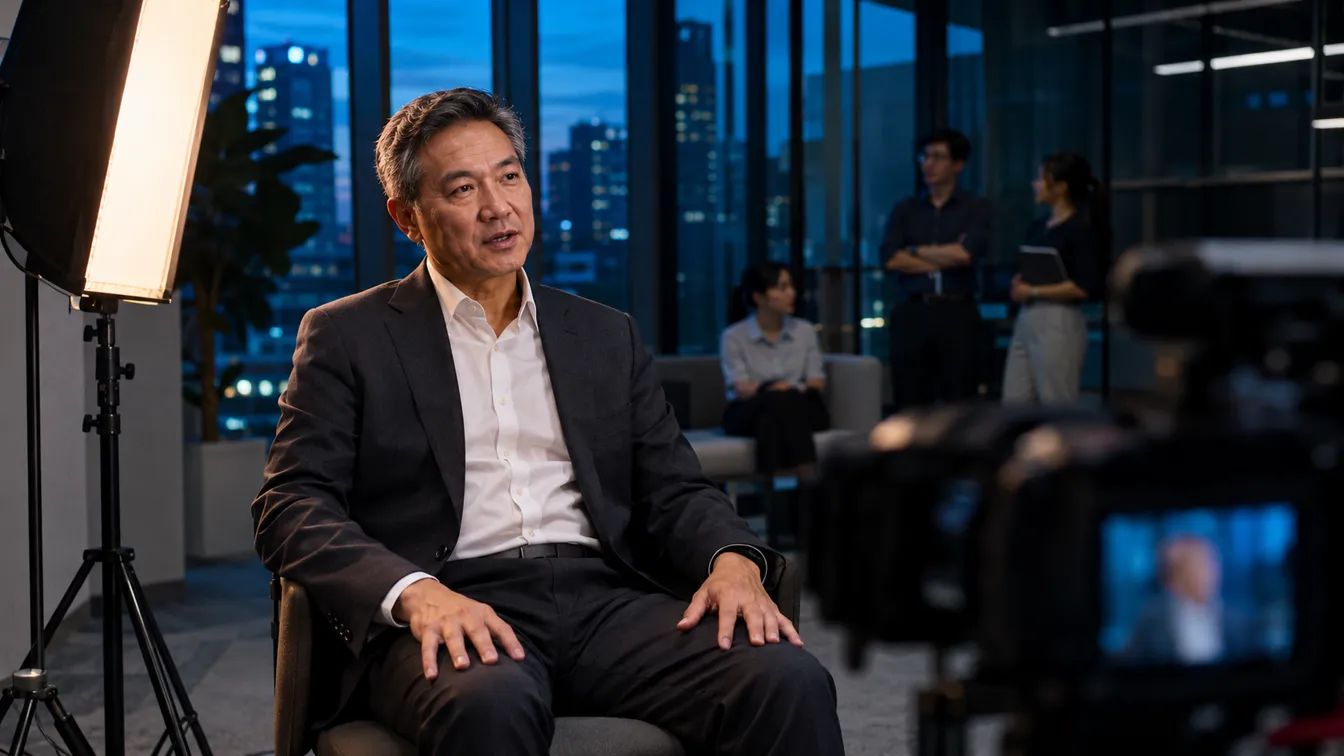
Choosing who appears in an MNC corporate video affects more than its visual presentation. It influences audience trust, message credibility, production costs, filming schedules and brand consistency. The right choice depends on the video's communication objective, target audience and distribution requirements.
Employees are generally best for authentic workplace stories, executives for leadership communication, and professional actors for scripted brand narratives. However, multinational companies often benefit from combining these groups when a corporate film needs to communicate several messages.
Should an MNC use employees, executives or professional actors in a corporate video?
An MNC should select on-screen talent according to the role each person plays in the story. Employees demonstrate actual workplace experiences, executives communicate organisational priorities, and professional actors deliver controlled scripted performances.
The decision should be made during pre-production, after the communication objective and creative direction have been established.
When should an MNC feature its own employees?
Employees are suitable when a corporate video needs to demonstrate genuine workplace experiences, organisational culture or operational expertise.
For example, an MNC producing an employer branding film can feature employees discussing their roles, career development and working environment. Real employee participation can make these messages more credible to prospective candidates.

However, employee-led production requires careful coordination. Marketing teams should consider:
- Departmental availability and filming schedules.
- Appearance releases and consent for external distribution.
- Interview preparation and message alignment.
- Employee representation across regional offices.
- Footage reuse if employees leave the organisation.
Employees should not be expected to deliver scripted performances like professional actors. Interview-led storytelling usually works better when participants can explain their experiences naturally within an agreed messaging framework.
When should executives appear in corporate videos?
Executives are appropriate when a video communicates corporate strategy, leadership priorities, organisational transformation or major business announcements.
A CEO explaining a company's long-term vision provides direct leadership communication. A regional managing director discussing market expansion can also give stakeholders relevant business context.
Executive-led videos require additional production planning because senior leaders often have limited availability and their messages may require legal, compliance and corporate communications approval.
A structured interview approach can help maintain message consistency without making delivery sound rehearsed. The production brief should establish key talking points, approved terminology, interview duration and any statements requiring internal verification.
For international distribution, companies should also plan subtitles, translated versions and regional adaptations before filming.
When should an MNC hire professional actors?
Professional actors are useful when a corporate video requires scripted storytelling, consistent character performance or customer scenarios that cannot be filmed naturally within the organisation.
For example, an MNC launching a financial service may commission a brand film showing how a customer interacts with the service. Professional actors allow the production team to control dialogue, character continuity and scene requirements.
Actors are particularly suitable for:
- Scripted brand films and promotional videos.
- Product and service narratives.
- Customer scenario-based storytelling.
- Corporate training and safety videos.
- Campaigns requiring consistent performances across multiple scenes.
The main production consideration is talent usage rights. Contracts should specify permitted territories, distribution channels, campaign duration, digital usage and renewal conditions.
Professional actors should not be presented as genuine employees or customers if doing so would mislead the audience. The distinction between fictional storytelling and documentary-style corporate communication should remain clear.
Can MNCs combine employees, executives and professional actors?
Yes. Combining different types of on-screen talent can create a more complete corporate narrative when each participant has a defined communication role.
Consider a multinational company producing a corporate brand film:
- The CEO introduces the company's vision and strategic direction.
- Employees demonstrate workplace culture and operational expertise.
- Professional actors portray customer situations within a scripted narrative.
This approach combines leadership authority, employee authenticity and controlled storytelling.
However, multiple participant groups increase production complexity. The creative brief should establish a consistent narrative structure, visual direction, messaging hierarchy and filming schedule. Without these controls, the final film can feel like separate interviews and scripted scenes assembled without a clear purpose.
What should MNCs evaluate before selecting corporate video talent?
Marketing and communications teams should evaluate six factors before approving their casting approach.
1. Communication objective: Determine whether the video needs to inform, build trust, demonstrate workplace culture or communicate a brand narrative.
2. Audience and geography: Consider language, cultural representation and regional relevance, particularly when distributing content across multiple markets.
3. Production budget: Compare the complete costs of employee coordination, executive scheduling, professional talent fees, usage rights and additional filming requirements.
4. Production timeline: Account for leadership availability, employee shifts, location access, casting and approval schedules.
5. Brand consistency: Ensure that participants, messaging and visual presentation support the company's established brand identity.
6. Distribution rights: Confirm appearance releases, talent agreements, territories, platforms and future footage usage before production.
These considerations should be documented during pre-production to reduce casting changes, reshoots and approval delays.
Final Thoughts
The choice between employees, executives and professional actors should follow the communication objective, not personal preference. Employees provide authentic organisational perspectives, executives communicate leadership priorities, and actors support controlled storytelling.
For MNCs, defining these roles during pre-production helps establish a realistic budget, filming schedule and creative direction while maintaining consistency across corporate communications.
Frequently Asked Questions
Are employees better than professional actors in corporate videos?
Employees are generally better for workplace culture and authentic company stories. Professional actors are more suitable for scripted narratives requiring controlled performances. The choice depends on the video's purpose.
Should a CEO appear in a corporate video?
A CEO should appear when the video communicates corporate strategy, leadership vision or major organisational announcements. Their participation provides a direct leadership perspective.
Does using professional actors increase corporate video production costs?
Professional actors introduce casting fees, talent costs and usage rights. Employee-led productions may reduce external talent expenses but still require scheduling, preparation and coordination. The total production budget should account for both.
Can employees and actors appear in the same corporate film?
Yes. Employees can communicate genuine workplace experiences, while actors can portray scripted scenarios. A consistent creative direction is necessary to connect both contributions.