A regional motorcycle distributor bringing a new model into Singapore usually has one pre-production unit in the country, on loan from the factory for a single week before it ships back for final approval. It has not been painted in its launch colourways yet. Nobody is taking the only unit in the region apart for a lens. A camera can shoot whatever sits in the studio that week and nothing beyond it.
Product visualisation exists for exactly that gap, and it is why vehicle and machinery brands lean on it harder than most other product categories operating in Singapore, the same ground covered in Dustin Hill Productions' complete guide to 3D development in Singapore. Modelling the machine once and rendering it digitally covers ground a camera genuinely cannot reach: colourways that have not been painted, a cutaway into a running engine. It also means placing that machine inside a showroom or on a trade-show stage without shipping the physical unit anywhere, though each new environment is built as its own scoped piece of work. Dustin Hill builds this work at the complex end of the range, the tier a motorcycle or a piece of industrial equipment sits in once its parts and interior become part of the brief.
Why marketing teams choose product visualisation over a vehicle shoot
The honest reason is availability, not aesthetics. A finished vehicle to film usually does not exist until very late in a program, sometimes not until the week of launch, while the marketing calendar and the dealer configurator already need imagery long before that unit exists. Product visualisation, what many buyers still search for as CGI, works from CAD data and reference photography instead of a finished unit, so a distributor can start building the film before the actual machine comes off the line. The vehicle in the render does not need to physically exist for the render to be correct.
An industrial equipment maker exhibiting at a trade show runs into a version of the same problem. The one production unit built for the booth demo stays on the factory floor until three days before the event, with no spare week for a studio shoot. Even with a spare week, half of what a buyer actually wants to see, the hydraulics mid-cycle, the load path running through the frame, sits inside the housing where a lens cannot follow it anyway.
What a camera cannot do once the machine is real
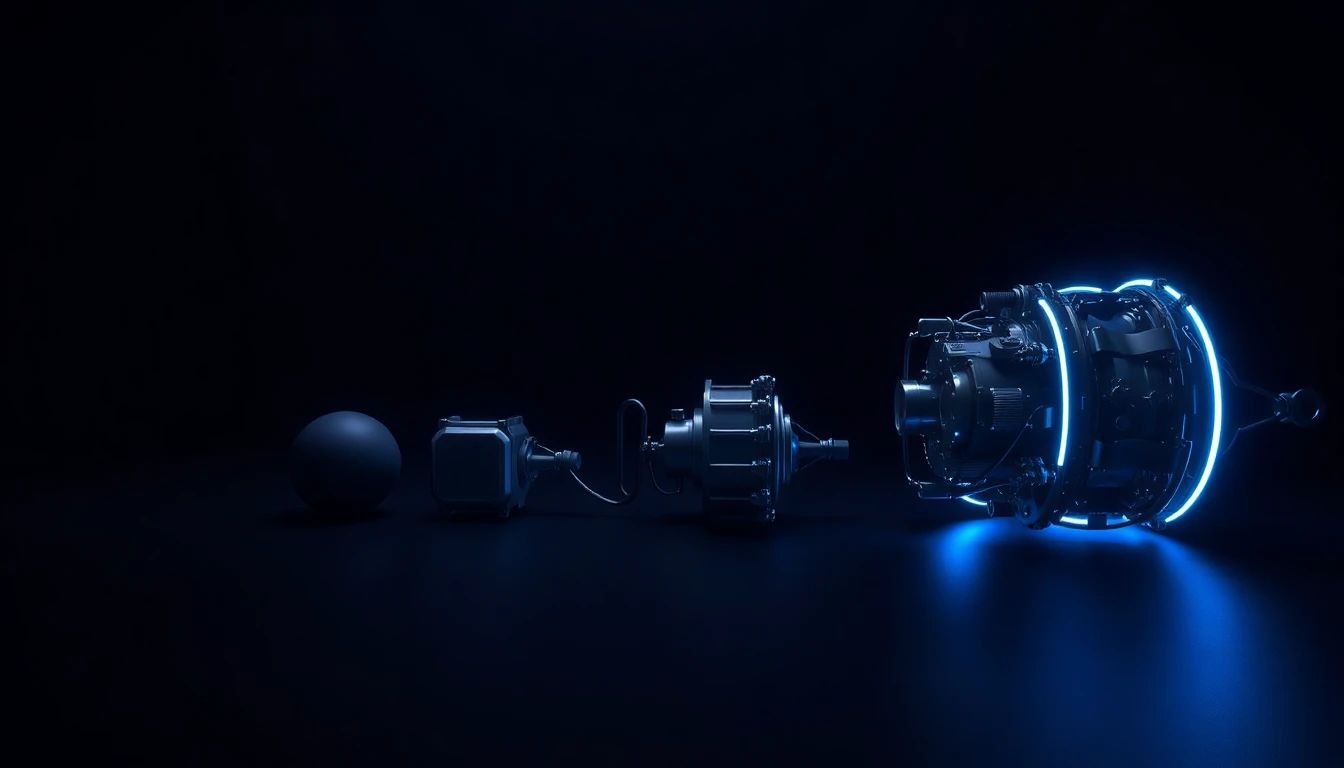
Even once a finished unit exists, a lens hits a hard ceiling a render does not. An exploded view, every panel pulled apart in mid-air to show how the machine goes together, is a manufacturing diagram rendered to look real. Only a render produces that shot. A cutaway into a running engine or a gearbox means slicing a working machine in half, a risk no distributor takes with their only demo unit. Placing that same bike in a showroom, then on a coastal road half a world away, without shipping the physical machine anywhere, is what a render delivers, regardless of shoot-day budget.
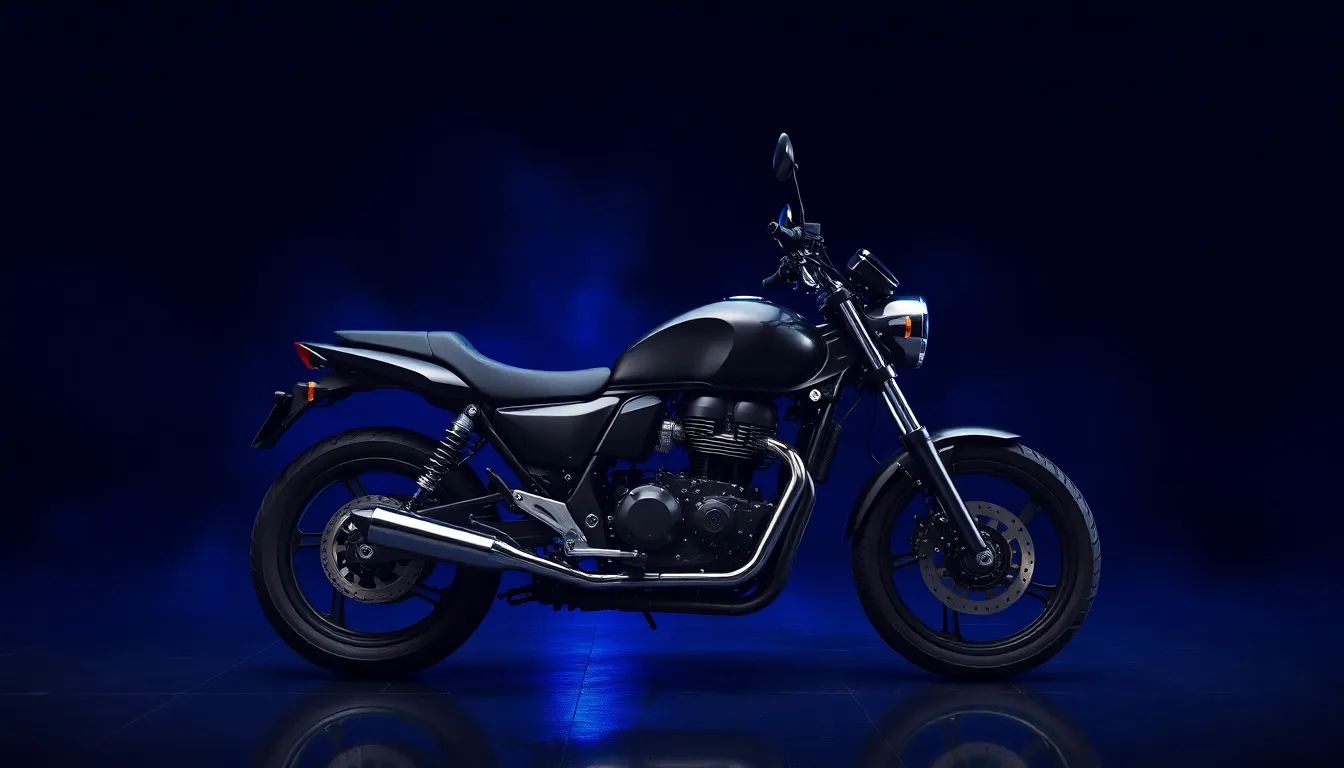
A motorcycle build Dustin Hill has published shows what this looks like carried all the way through. The full machine sits in frame first, paint and chrome holding a highlight the way a studio lens would spend hours chasing. The camera then moves in past the fairing, into the engine block and the cabling routed behind the tank, detail a real teardown would need a technician's time and care to expose safely. The studio around it, the turntable and the backdrop, is generated too. It is the same principle Dustin Hill's cosmetics work runs on, only scaled up to a machine with hundreds of parts instead of one bottle.

Colourways and trims that do not exist in metal yet
A launch range rarely ships as one machine. It ships as a base model and a performance trim, sometimes with a limited paint run announced before a single unit leaves the factory in that colour. A live shoot needs the actual object in the room for every version, so a five-colourway range means five physical units and five studio bookings, one for each version. Once the base model is built digitally, changing the paint or the trim badge is a fraction of the work the original build took, the same trade cosmetics briefs make when one bottle mould covers a dozen shades.
The same logic covers a machine still in development. A concept variant or a next-generation redesign announced ahead of tooling can be rendered from CAD data and reference photography alone, long before a physical prototype exists to put in front of a camera at all.
Where a motorcycle or a machine sits on the complexity range
Dustin Hill prices 3D work by what the model actually contains and how much the render has to carry. A single product with no render attached, just the digital model itself, sits at roughly SGD 2,000 to 6,000, useful when a manufacturer mainly wants an asset to reuse across future briefs. A single product modelled and rendered as one finished piece runs closer to SGD 8,000 to 12,000.
A motorcycle or a piece of industrial equipment sits well past both. One spoon is not one car. A car might mean the shell, or the engine sitting inside it, or the interior, or the screws holding the panel on, and every layer added moves the price. Once the engine and the interior are part of the model, and the render has to carry that detail across its full duration, the range moves to roughly SGD 30,000 to 40,000. That range describes the tier a machine of this complexity runs at in Singapore, whatever the make or model, independent of any single published piece, including the build described earlier. To be direct about it, the number is set by how much of the machine the model has to contain and how long the render runs, worked out in a scoped conversation before any number is final.
That same complexity-to-price relationship is covered from the simpler end in Dustin Hill's piece on product visualisation for cosmetics and FMCG, and broken out tier by tier in this guide to what each 3D budget actually includes.
One build, reused across the whole launch
The upfront build on a machine this detailed costs more than a single shoot day would. What it buys back is reuse. A live shoot is a one-time event, whatever gets captured that day is the asset library for the entire campaign. Product visualisation flips that. Once the motorcycle or the machine exists as a model, the launch film is only the first thing it pays for.
The dealer site's configurator stills come from the same build. So does the trade-show floor loop. Social cuts through the following months draw from it too, a new angle or a lighting change rather than a second shoot day added to the bill.
Bringing a vehicle or machinery brief to Dustin Hill
A useful brief here starts with what already exists, CAD files and reference photography of a prototype or a prior model, enough to start a scoped conversation about which trims and environments matter most.
For a motorcycle launch or an industrial equipment line with parts worth showing, the 3D development team at Dustin Hill can look at what already exists and put a real range against it. Start a Conversation. No pressure, just a clear look at what's possible.