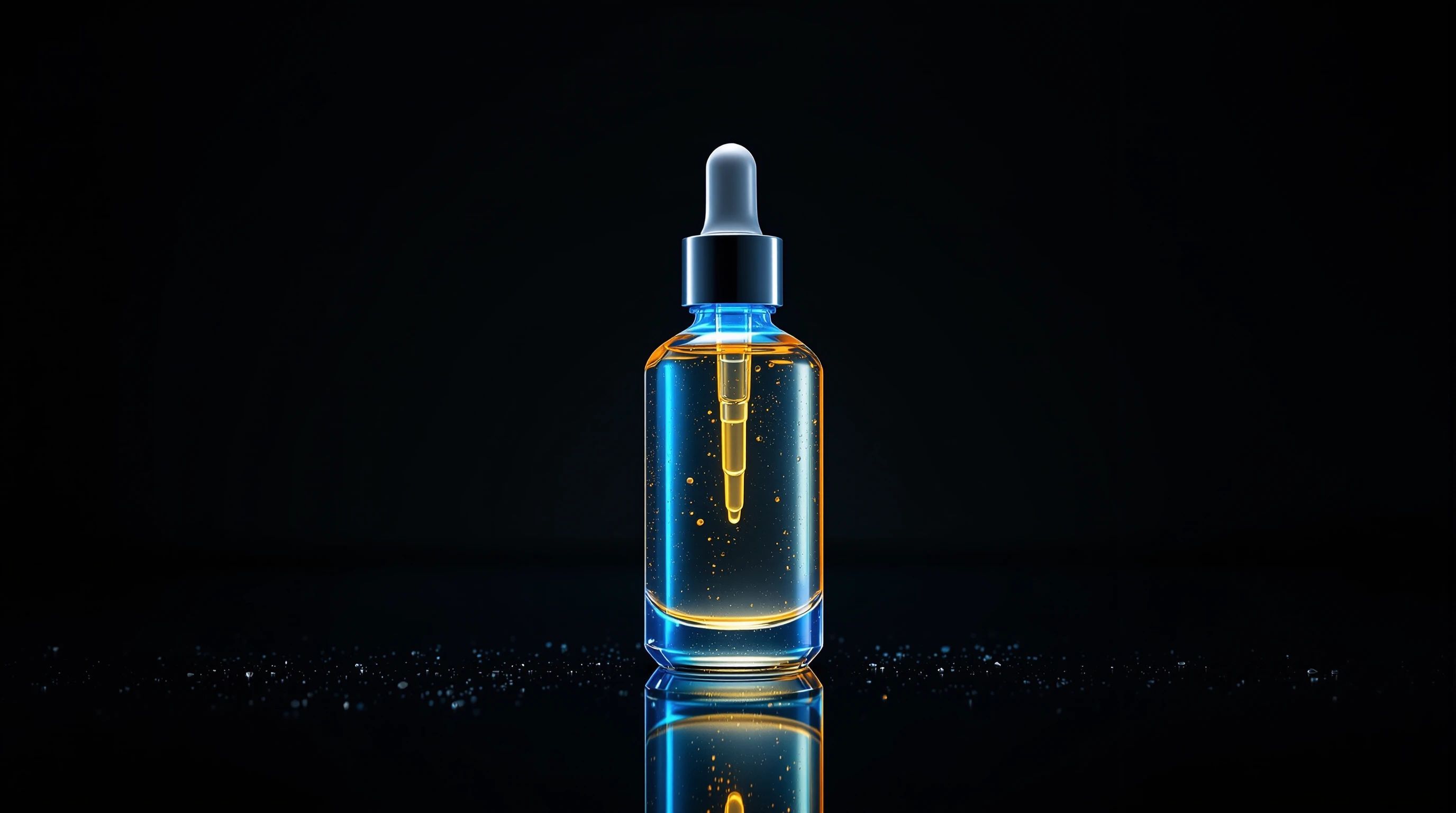
A skincare brand about to launch four shades of the same serum bottle usually has one finished sample in hand. The studio is booked for a single day. Three more shades are still sitting in packaging approval, and a camera can only point at what physically exists on set. A shade that has not come back from the factory yet does not get photographed, no matter how firm the launch date is.
Product visualisation solves that exact problem, and it is a large part of why cosmetics and FMCG brands lean on it more than almost any other product category in Singapore. Some briefs still go looking for the same work under an older label, 3D animation, or its close cousin 3D rendering. Inside a scoped conversation, all three describe modelling a product digitally and rendering it at a level of realism a camera would otherwise have to fight for on set, the same ground covered in Dustin Hill Productions' complete guide to 3D development in Singapore. Packaging this small and this reflective, sold in a dozen variants at once, gets the clearest advantage from it. That advantage shows up in three places: the macro detail, the variant count, and the launch calendar.
Why cosmetics and FMCG packaging is a particular kind of hard
Cosmetics and FMCG packaging is unusually unforgiving to shoot. Glass reads differently depending on what is behind it. Liquid needs its own lighting pass to look full rather than flat. A metal cap catches a highlight that shifts the moment the bottle is nudged half a centimetre on the table. None of that is exotic to a photographer, but it is slow, and slow does not sit well with a category that also produces more SKU variants than almost any other product type: shades, scents, sizes, limited editions, and versions built for a single retailer or a single market.
A regional launch compounds it further. A shampoo bottle sold across Singapore and its neighbouring markets often needs a handful of pack sizes and, sometimes, a market-specific label. The hero imagery still has to work across e-commerce, social, in-store, and paid media, all while reading as the same product everywhere it appears. Booking a shoot day for every version of that bottle is possible. It is also the slow, expensive way to solve a problem product visualisation was built for.
The same pattern holds outside cosmetics. A beverage brand doing a festive-season can wrap, or a snack brand relaunching a bag ahead of a retail reset, faces the identical bind. Several pack designs are due on the same date. There is one production line to run them through. The photography budget was sized for one hero shot, not six. Product visualisation treats a can wrap or a snack bag exactly the way it treats a lipstick shade. The base geometry barely changes. The artwork does.
Macro detail a camera has to fight for, every time
A cosmetics line's own showcase reel Dustin Hill has published is a good demonstration of what this looks like once it is actually built. Two products sit inside it, a cream jar and a dropper bottle. The jar's wine-tinted variant reads as genuinely translucent glass, darker at the base where the light has to travel further. Its frosted white variant reads as frosted glass with a polished metal lid rim catching a clean highlight. The dropper bottle holds a pink liquid with a soft meniscus and its own internal light scatter, the kind of detail a macro lens usually needs several attempts and a retouch pass to get right.
What is easy to miss on first watch is that the entire studio around the product is computer-generated too. The podiums, the paper-craft backdrops, the floating discs, and the ring light rotating around the jar are not a physical set. That matters more than the material accuracy does, because it means realism is not the ceiling on what product visualisation can do for a cosmetics brief. It is the floor.
One model, every shade: what changes and what does not
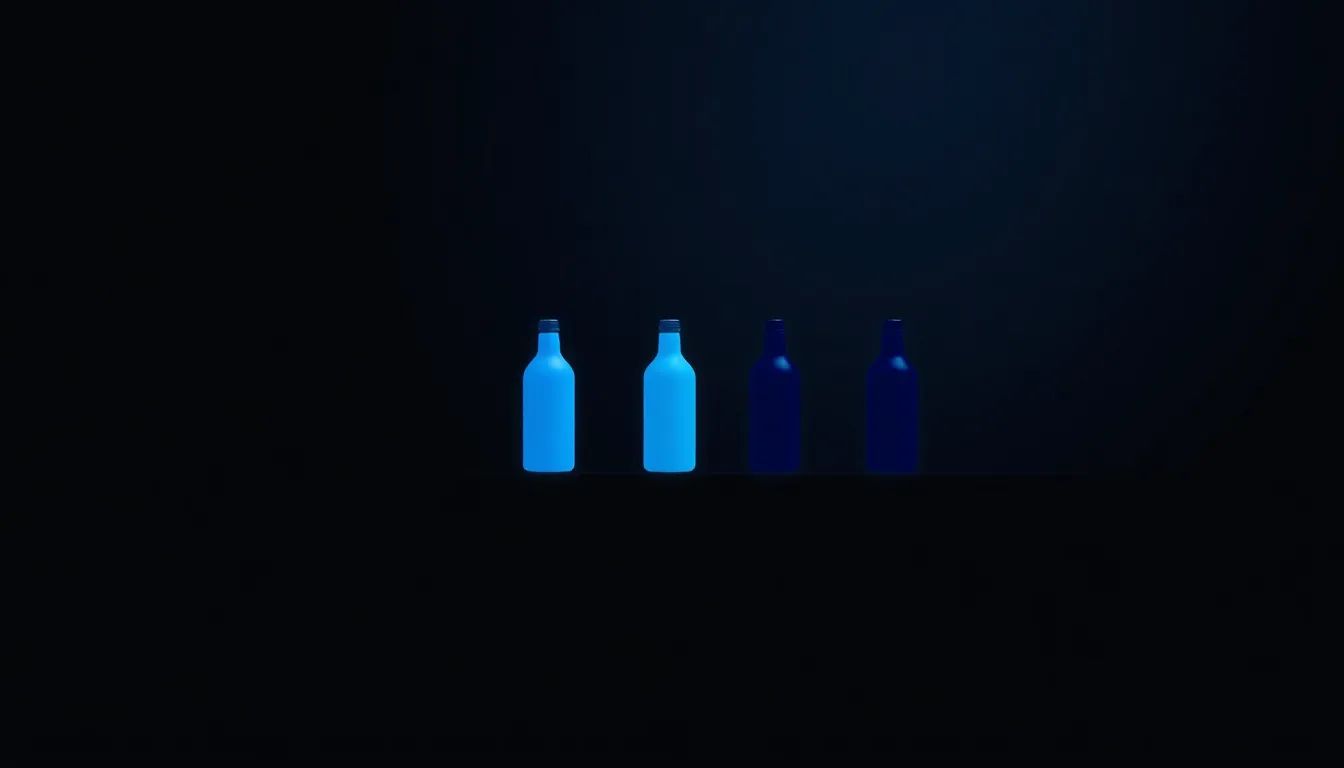
A shade range, a flavour range, a pack-size range, or a regional pack variation is usually one product with a handful of surface changes layered on top. The bottle shape, the cap, the label position, and the proportions stay the same across the range. Once the base model exists, changing the rest is a fraction of the work that went into building the base model itself.
FMCG brands lean on this even harder than cosmetics does, because the pack changes more often. A soft drink brand doing a Lunar New Year can and a National Day pack on top of its standard year-round version is not building three separate products from a 3D studio's perspective. It is one can with three coats of paint.
What actually changes between variants is a short list:
- Liquid or product colour and opacity
- Label or engraving artwork
- Cap, closure, or applicator finish
- Fill level or pack size
A live shoot cannot make that same trade. Every shade change means relighting a new physical bottle, and a full shade range can mean a dozen lighting passes before a single hero frame is locked. The build-once, reuse-forever trade-off behind that gap is worth understanding on its own, and it is covered in where 3D and a live product shoot spend money differently, since the same economics are what make a shade range cheaper to multiply once the base model exists.
Starting before the product physically exists
Packaging approval rarely finishes on schedule. A label gets revised after legal review. A cap supplier swaps a finish. A shade gets reformulated two weeks before the launch date. A physical shoot needs the finished object in the room, which means the shoot waits for whichever version of the product is slowest to arrive.
Product visualisation does not carry that dependency. A model can be built from a spec sheet, a packaging file, a CAD export, or reference photography well before a physical unit exists, and the render can be finished the same week the artwork is approved rather than the week the first production run comes off the line. For a brand working toward a fixed retail or campaign date, that timing difference is often worth more than the visual result on its own.
Regional FMCG adds another layer. A pack sold into Malaysia or Indonesia alongside Singapore often needs its own ingredient panel and its own halal mark, and the translated copy for each rarely clears on the same day. A 3D build can carry a placeholder label until the real artwork lands, then swap it in without touching the rest of the model. A physical print run does not get that flexibility. Once the boxes are printed, the label is final.
Where cosmetics and FMCG sit on the range
Dustin Hill prices 3D work by what the model actually contains and how much the render has to carry, not by a flat day rate. A single hyper-real product, modelled and rendered as a finished piece, the tier most cosmetics and FMCG briefs land in, sits at roughly SGD 8,000 to 12,000 in Singapore. A simpler brief, one clean product model with no finished render attached, sits lower, in the SGD 2,000 to 6,000 band, useful when a brand mainly wants the model itself to reuse across many future images.
Both figures are ranges, not quotes, because the real cost driver is scope: how much of the product needs to be shown and how many variants ride on the same base model. How long the finished piece runs moves the number too, well before a studio ever names one. The Singapore 3D cost index breaks those bands out tier by tier if a fuller comparison is useful before a call.
Bringing a Singapore cosmetics or FMCG brief to Dustin Hill
A useful brief for this kind of work does not need finished packaging or a finished formula. The product's dimensions or a CAD file, plus reference photography of anything already made, are usually enough to start a scoped conversation about which variants need to appear in the final set.
For a shade range, a flavour range, a pack-size range, or a single hero product about to launch in Singapore, the 3D development team can look at what already exists, whether that is a spec sheet or a finished sample, and put a real range against it. No pressure, just a clear look at what's possible.