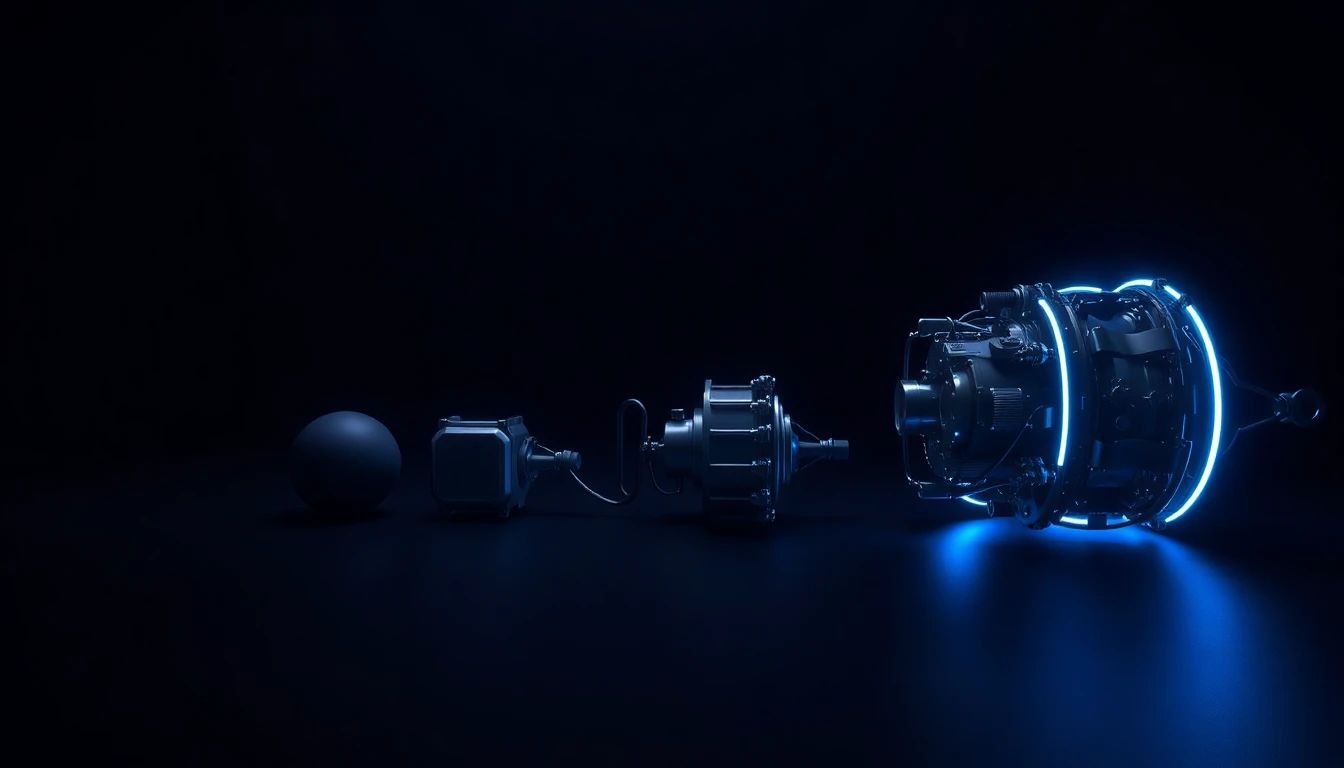
A global medical device manufacturer is eight months from launching a new infusion pump in the region. Marketing needs a three-minute film for the launch event, the sales team, and the regional distributor portal. There is a problem that has nothing to do with creative direction: the device does not exist yet in a form anyone is allowed to point a camera at. There are two engineering prototypes, both under NDA, both grey.
That situation answers the format question before anyone debates style. Most commissioning conversations do not arrive that cleanly, though, and the choice between 3D animation and live action gets argued as a matter of taste, or of budget, or of what the last video happened to be. It is neither. It is a question about what has to be visible on screen for the film to do its job, and about which format can physically put that thing in front of a viewer.
The short version. Live action shows what exists, in a real place, with real people, and it carries human credibility that nothing else replaces. 3D animation shows what a camera cannot reach: the inside of a sealed assembly, a process at a scale no lens sees, a product still in CAD. If the thing you need the audience to understand is currently invisible, animation is not the stylistic option. It is the only option.
What does each format actually do best?
Live action puts a viewer in a room with people. A plant manager walking a production line, a surgeon describing why a change to a workflow mattered, a factory floor at shift change: these carry a weight that comes from being demonstrably real, and audiences read that weight quickly. It is also the faster route when the subject already exists and can be filmed.
3D animation removes the physical constraints of a camera. Walls become transparent when a viewer needs to see through them. Time speeds up or stops. A component the size of a grain of rice fills the frame at a scale no macro lens achieves, and a sequence that would take a fortnight to stage in a working facility takes place without interrupting the facility at all. Animation also has a property that matters to regional marketing teams: the asset is editable later, so a product revision or a new market variant does not require another shoot.
The scale at which that substitution already happens surprises most people. IKEA moved from around 12 percent computer-generated product images in 2012 to roughly 75 percent of its catalogue imagery being CGI by 2014 (Fast Company, 2014), and the reason was practical rather than aesthetic: a rendered sofa can be recoloured for eleven markets without eleven photoshoots. If a viewer cannot tell which images in a furniture catalogue were photographed, the credibility question about animation is narrower than it first appears.
| Format | Shows best | Where it struggles | Best for |
|---|---|---|---|
| Live action | Real people, real facilities, trust and testimony | Anything internal, microscopic, hazardous or unbuilt | Brand films, leadership messages, culture and facility stories |
| 3D animation | Internal mechanisms, unreleased products, invisible processes | Human warmth and unscripted moments | Product launches before manufacture, technical explanation, regulated sectors |
| Motion graphics | Data, structure, abstract relationships | Physical objects and spatial understanding | Results decks, process overviews, short social cutdowns |
| Live action plus CGI | A real environment with the invisible part revealed inside it | Budget and schedule, since it carries both pipelines | Manufacturing and engineering stories that need both credibility and X-ray vision |
Does animation lose credibility against real footage?
This is the objection that usually arrives from a stakeholder late in the approval chain, and the evidence is more interesting than either side of the argument expects. A 2012 study by Smith, McLaughlin and Brown in the CITE Journal showed the same instructional scenario to two groups, one as live-action video and one rebuilt as 3D computer animation, then asked both groups what they had observed. Across eleven behavioural observations, nine showed no statistically significant difference. The authors concluded there was no significant loss of intended content for viewers of the animated version.
The two exceptions are the useful part. Viewers of the animation noticed whispering roughly three times more often. Viewers of the video noticed quick eye movements roughly four times more often. Neither format was better. Each one foregrounded a different class of detail, because animation only contains what somebody decided to build, while a camera records everything in front of it and lets the viewer find what they find.
That is the practical reading for a commissioning decision. Animation is a directed medium in which attention is controlled by construction, so it is strong when a specific mechanism has to land and weak when the point of the film is authenticity you cannot script. Live action is an observed medium, generous with incidental truth and clumsy at explaining anything hidden inside a sealed housing.
How do the timelines actually compare?
Format choice moves the calendar more than most buyers expect, and it moves it in a shape rather than a single number. Published 2026 production benchmarks put simple live action at roughly four to six weeks end to end and complex live action at seven to twelve, against roughly ten to twenty weeks for full 3D animation, which runs a sequential pipeline of modelling, texturing, rigging, animation, lighting and rendering (Green Frog Labs format comparison, 2026). The interesting overlap sits at the top end: complex live action and complex animation land close to each other, which means at higher production levels the difficulty of the story governs the schedule more than the format does.
Within animation the variable that moves the schedule hardest is not length. It is style, because the animation style chosen at the start sets the production timeline before a single asset is built. The same logic separates the two animation families, and the timeline and cost drivers that split 2D from 3D are worth understanding before a format is locked, since a 2D treatment sometimes answers the brief at a fraction of the pipeline.
Style is also where the vocabulary turns slippery. A quote can say motion graphics, 3D animation or VFX and mean three different processes with three different cost drivers, so it is worth knowing what each of those disciplines actually means on your project before you compare the numbers. Where a brief leans illustrative rather than photoreal, when hand-drawn animation suits a brand film covers where that choice earns its keep and where it works against the message.
Where does the money sit differently?
Live action concentrates cost into a small number of irreversible days. Crew, kit, location and talent all bill against the shoot, and the day has a cliff edge in it: commercial productions commonly move to overtime at time and a half after ten hours on set (2026 film crew day rate guidance). Multiply that across a fifteen or twenty person unit and a two-hour overrun is a real line item, which is why a live-action budget is mostly a bet on how well the day was planned.
3D spreads cost across weeks of build instead, with almost nothing recoverable by moving faster on any single day. What 3D development costs in Singapore turns mostly on asset complexity and render load, and what each 3D budget tier actually buys is a more useful question than a single headline figure. The compensating advantage arrives later: a built 3D asset can be re-cut, re-lit and re-rendered for the next campaign, which a shoot day cannot. A second live-action film means a second shoot. A second animation often means a second edit.
For a number to take into an internal budget conversation, what corporate video actually costs in Singapore and where the money goes covers the live-action side, and the Singapore 3D cost index covers the other.
When is the honest answer both?
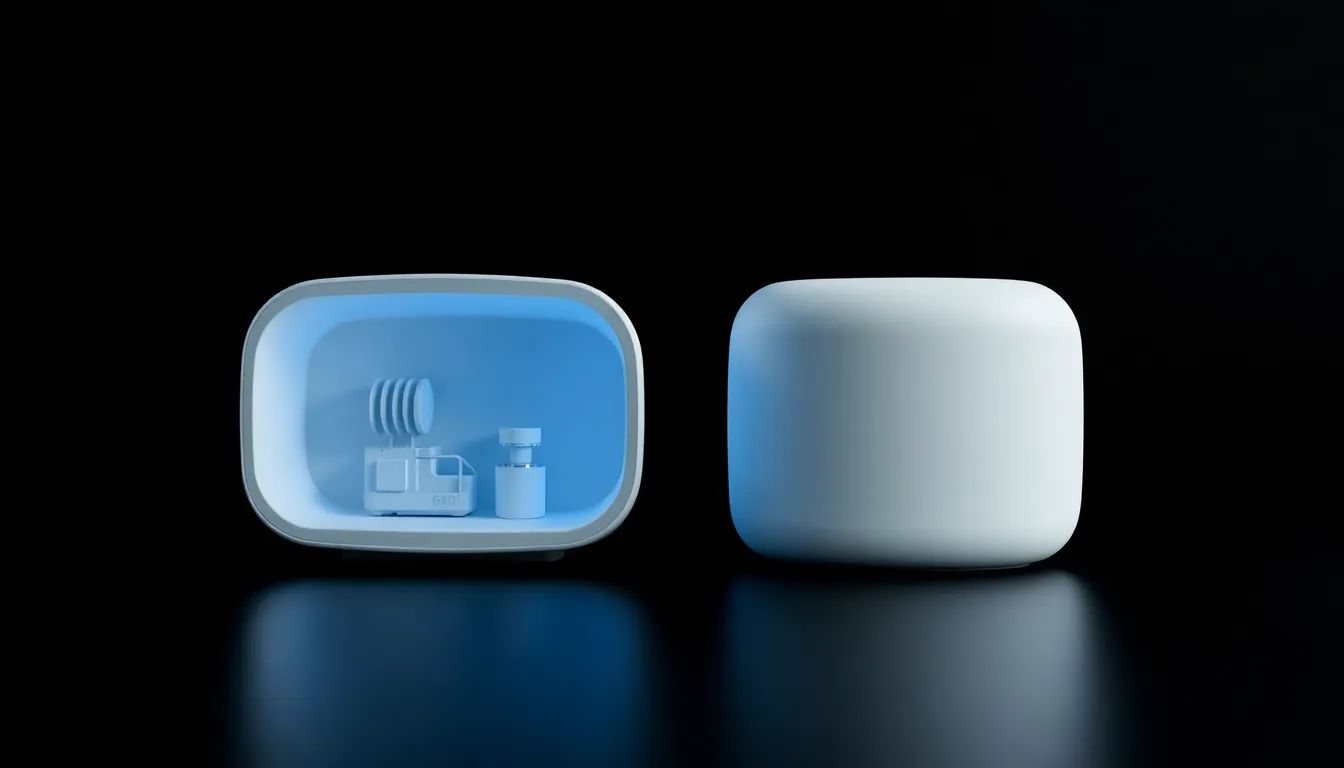
Often, and increasingly. A 2025 Wyzowl survey found 37 percent of businesses now use hybrid video combining live footage with animated elements. A manufacturing story frequently needs the real plant for credibility and a CG cutaway for the part of the process sealed inside a machine, and the two carry each other: the footage proves the place is real, the render explains what the place is doing. For a product film specifically, the choice between 3D and live action turns on different factors again, and the techniques for placing real footage inside a constructed 3D scene are what make a hybrid read as one film rather than two intercut ones.
The cost of a hybrid is that it carries both pipelines, so it is the wrong answer when the budget is genuinely fixed and the story only needs one of them. It is the right answer when a viewer has to believe the place and understand the mechanism in the same three minutes.
So how do you decide?
Three questions settle most briefs before any studio is contacted. First, does the thing the audience must understand physically exist, and can a camera legally and safely reach it? If not, the format is decided. Second, is the persuasive weight of the film carried by a person or by a mechanism? People argue for live action, mechanisms argue for animation. Third, will this asset be revised for other markets, other products, or a next-generation model within eighteen months? Reuse argues strongly for 3D.
Answering those three inside the brief is what makes an incoming quote accurate rather than a range, and what a 3D studio needs in a brief to quote properly sets out the rest. Dustin Hill Productions runs both sides in house, 3D development and rendering alongside corporate video production, which means the format conversation can stay a question about the film rather than a question about which vendor is in the room. There is a version of your launch that shows the thing nobody has been able to see yet. That is usually the film worth making.
Common questions
Is 3D animation more expensive than live action?
Not reliably. A single-location interview shoot can cost less than a photoreal product animation, and a multi-day regional shoot with talent, permits and travel can cost considerably more than one. The formats price differently rather than one being cheaper: live action concentrates spend into shoot days, 3D spreads it across a build. Compare against the specific scope, never against the format label.
Will an animated corporate video look less serious to a B2B audience?
That depends on execution rather than format. The 2012 CITE Journal comparison found no significant loss of intended content when a scenario was rebuilt as animation. Where animation reads as unserious it is usually a style problem, a cartoon treatment applied to a technical subject, rather than a medium problem.
Can 3D animation start before the product is finished?
Yes, and this is one of its structural advantages. Work can begin from CAD data or engineering drawings while the physical product is still in tooling, which is why animation frequently carries launches where the film has to be finished before the first unit exists. Late design changes do cost time, so the build usually starts from a frozen revision.
How long does a 3D corporate animation take compared with a shoot?
Published 2026 benchmarks put simple live action around four to six weeks and full 3D animation around ten to twenty, though complex versions of each converge. If a launch date is fixed and close, that gap is the single most important input to the format decision.
What if we need the film in five markets?
Multi-market requirements push toward 3D, because localised variants come out of the same asset without a reshoot, and on-screen text and voiceover can be swapped without re-staging anything. A live-action equivalent generally means either one film subtitled five ways or five shoots.