A skincare group needed six hero shots of a serum bottle that had not cleared packaging approval yet. A manufacturer wanted a global stakeholder to see inside a production line without shutting it down for a camera crew. An event team needed a client to sign off on an exhibition booth before a single wall existed. None of the three had anything a camera could point at yet. All three solved it the same way: build the thing in three dimensions first, and let the render carry what a shoot could not.
This is Dustin Hill Productions' complete guide to 3D development in Singapore. It sets out what the discipline actually involves, what it costs here in real ranges, and how the whole process runs, from a scoping call to a finished render. Marketing and comms teams across Singapore and the region use it most for exactly the kind of brief this guide walks through.
What this guide covers, in order:
- What 3D development actually means
- When 3D beats a live shoot, and when it does not
- What 3D development costs in Singapore
- What actually drives the price
- The process, from first call to finished render
- Where 3D development gets used most
- Build once, reuse forever: the economics behind the cost
- Frequently asked questions
What 3D development actually means
At Dustin Hill Productions, 3D development means modelling something physical, big or small, as a digital file, then rendering it until a viewer cannot tell it was never in front of a camera. Product visualisation and 3D rendering describe the same underlying craft, applied to a single hero object or a full scene. None of it should be confused with the two dimensional animation Dustin Hill treats as a separate service.
Dustin Hill does not price 3D work off a technical spec sheet, because a client rarely needs a conversation about their own serum bottle framed that way. The question that actually matters is closer to something you would ask about a car. Does one model mean the outer shell, or does it mean the engine and the interior, right down to the fasteners holding the panels on. That question decides how a 3D project actually gets scoped and priced.
Dustin Hill's own showcase reel for a cosmetics brand shows what this looks like finished: one product, several distinct materials including tinted glass, frosted glass, a polished metal lid, and a genuinely liquid-looking serum, inside a full photo studio built entirely inside a computer around it. That is 3D development delivered as a finished piece, not a technical demonstration.
When 3D beats a live shoot, and when it does not
A live product shoot is a straightforward trade: a studio day, a crew, a physical sample, and one exported file for what the camera saw. What you shoot is what you get, and a second angle after the edit locks means booking the day again. Three-dimensional development flips that shape. The upfront cost is higher because a model has to exist before anything renders, but once it exists, a new angle or an entirely different scene is a render pass rather than another shoot day.
The full breakdown of where each dollar actually goes on a live shoot versus a 3D build, with honest Singapore figures for both, is covered in 3D or a live product shoot: where each dollar goes.
A live shoot is still the right call when a real person needs to be on camera, or when the product will only ever appear once with no plan to reuse it. It is also the faster route when a launch date is close and no 3D asset already exists to build from.
Three-dimensional development earns its cost when the product does not exist yet in finished form, or when the same asset needs to work across many variants or markets. It also earns its cost when the whole scene, not the product alone, has to be built.
What 3D development costs in Singapore
Ask what 3D development costs and the honest answer is a range, because one model can describe a spoon or a car equally badly. Dustin Hill Productions bands its own Singapore pricing into four tiers, drawn from real project history rather than a rate card.
Ranges below are Dustin Hill's own Singapore benchmarks. They describe what has held true across many projects of similar complexity, not a rate card for any specific piece.
- Single simple product, development only, no render included: SGD 2,000 to 6,000.
- Simple hyper-real product, model and render together as a finished piece: roughly SGD 8,000 to 12,000.
- Full environment build, finished piece including render: roughly SGD 20,000.
- Complex model with real interior or moving parts, model and render together: roughly SGD 30,000 to 40,000.
These are ranges, not quotes, and development only is not the same purchase as a finished piece. The first tier buys a reusable model with nothing rendered yet. The other three buy a complete, publishable render. Comparing a tier one number against a tier two number is comparing a foundation to a finished building.
For the full reasoning behind why the range moves the way it does, see what 3D development costs in Singapore, and why it is a range. For the same bands broken out tier by tier with more first-party detail, see the Singapore 3D cost index.
For what each tier actually delivers to the client, not only what it costs, see what each 3D budget tier actually buys.

What actually drives the price
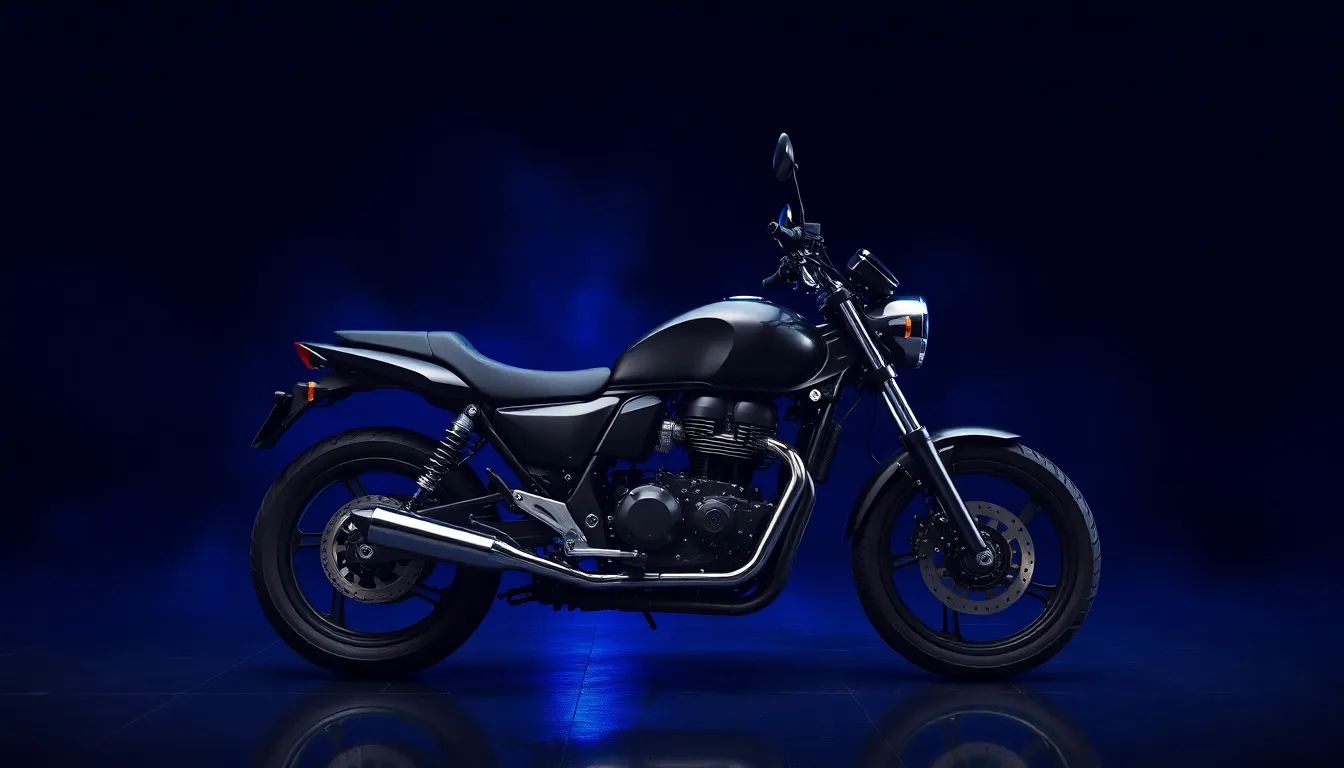
Two things move a project between tiers. The first is model complexity, what the object actually contains, one clean surface or hundreds of separately modelled and surfaced parts. Dustin Hill's own showcase reel for a race motorcycle, modelled down to the brake calipers, the chain, the cockpit dash, and the exhaust, closes on a full wireframe reveal specifically to show the difference between a single shell and an assembly of parts each carrying its own material.
The second is rendering, how long the finished film runs, and what environment the object sits inside. A longer render is more frames, and every frame has to be computed regardless of how simple the object is. The environment matters just as much. A product on a plain background is cheap to render. The same product placed inside a built space, a showroom or a museum interior, means the environment is effectively its own build. A spoon inside a hyper-real museum is not really a spoon job. It is a museum job with a spoon in it.
Bringing clear answers to both questions, what the model actually contains and what it renders into, is the single biggest thing that turns a wide range into an accurate quote on the first call. How to brief a 3D studio so the quote comes back accurate covers exactly what to bring.
The process, from first call to finished render
A 3D project at Dustin Hill Productions moves through four stages, and the tier only changes how long each one takes. First, a scoping call establishes what the object or space actually contains and where the finished piece will be used. Second, the model gets built from whatever reference exists, a spec sheet, a CAD file, packaging artwork, or reference photography, often before a finished physical sample exists at all.
Third, the model moves into look development and a test render, checking how materials and lighting hold up against what the brief actually needs before committing to the full render. Fourth, revisions and the final render close out the project. Because the underlying model is now a standing asset, most future requests against the same product start from step three rather than step one.
Timeline runs longer than a live shoot because the model has to exist before anything can be rendered, but it buys back that time on every future request against the same asset.
Where 3D development gets used most
Cosmetics and FMCG packaging is the single heaviest user of 3D development in Singapore. The packaging itself is small and reflective, and it usually ships in more variants than almost any other product category. Product visualisation for cosmetics and FMCG in Singapore covers why this category leans on 3D so heavily, and what changes between variants once a base model exists.
Manufacturers and industrial brands use it differently. A production line or a piece of complex equipment can be shown mid-operation or from an angle no camera could safely reach, without shutting down a real facility for a shoot. A global medical device manufacturer expanding Singapore production, for instance, can show a process line to regional stakeholders in a render built from CAD files, long before the physical line itself is finished.
The same logic scales up to an entire space. Dustin Hill has built a branded exhibition environment as a full 3D mockup for a product launch event, the architectural shell, a staged demo area, lighting rigs, and the hero objects inside it, modelled and lit as a walkthrough before a single physical wall existed.
Watch the environment build to see what a client signed off on before construction began.
Build once, reuse forever: the economics behind the cost
The upfront number for 3D development is higher than a single live shoot for a reason, and the reason is what happens after the first invoice clears. Once a model or a built environment exists as a file, restaging it for a new market or a new angle costs a fraction of what it cost to build the first time. A live shoot cannot make that trade. A new angle means booking the studio again.
Children's television leans on this same arithmetic more than almost any other production category, which is most of why so much of it runs in 3D rather than live footage. Why children's cartoons are 3D: asset reuse economics traces that logic in full, and applies it directly to a product or environment a brand plans to use more than once.
The question worth asking before choosing a format is not which one costs less on the first invoice. It is how many times the finished asset needs to earn its keep.
Frequently asked questions
Is 3D development the same as 3D animation?
Effectively yes. Clients sometimes still search for this work under that older name. On Dustin Hill's site, 3D development is the umbrella term, and product visualisation or 3D rendering describe the same underlying craft applied to a specific object or scene. Animation on its own refers to Dustin Hill's separate two dimensional service.
How much does 3D development cost in Singapore?
In real ranges, not fixed prices. A single product model built as development only runs roughly SGD 2,000 to 6,000. A finished, hyper-real product render runs roughly SGD 8,000 to 12,000. A full environment build runs roughly SGD 20,000. A complex model with real interior detail, modelled and rendered together, runs roughly SGD 30,000 to 40,000. The exact figure inside any of those bands depends on what the model actually contains and what it renders into.
Is 3D development cheaper than a live product shoot?
Not on the first invoice. A live shoot is usually the lower upfront cost for one use. 3D development becomes the cheaper option once a product or space needs to be reused across more than one angle or market, because the same model can be re-rendered for a fraction of what it cost to build the first time.
None of the ranges above become a real number until a project actually gets scoped, and that conversation is the real product Dustin Hill Productions delivers before a single frame renders. Bring whatever exists, a spec sheet or reference photography, and the 3D development team can tell you within one call which tier the project sits in and what it will take to build. No pressure, just a clear look at what's possible.