A cosmetics client asking for a hero shot of a single serum bottle gets a quote in the low thousands. A regional automotive brand asking for a motorcycle with a modelled engine, brake assembly, and chain drive gets a quote ten times higher, sometimes more. Same medium. Same studio. The gap is not padding. It is what got built.
This is the pattern behind every 3D quote Dustin Hill Productions sends out, and most buyers see it for the first time when the number arrives. Here is that pattern laid out in advance, banded by tier, drawn from Dustin Hill's complete guide to 3D development in Singapore, so a marketing or comms lead walking into a 3D conversation already knows roughly where their project sits before the call starts.
Why one number never works for 3D
A live product shoot has a single cost shape: studio day, crew, gear, done. Three-dimensional development does not work that way, because the thing being quoted is not a shoot day. It is a model, and models vary in what they actually contain.
One spoon is not one car. A spoon is a single surface with one material. A car might mean the exterior shell, or it might mean the exterior plus the interior, the engine bay, the wheels, and every fastener that holds the panels on. Each of those is a different job, and the difference shows up directly in the quote. This is the real driver behind every 3D price range in Singapore, and it is the one thing worth understanding before requesting a number.
For a fuller walkthrough of why 3D pricing works as a range rather than a fixed rate, see the full cost breakdown Dustin Hill has published separately.
The three tiers, banded
Dustin Hill has run enough 3D work across cosmetics, F&B, tech, and automotive clients to band pricing into three honest tiers. These are ranges, not quotes. Every project still needs a scoped conversation before a number gets attached to it, because scope is what actually sets the price.
Ranges below are indicative, drawn from Dustin Hill's own project history. They describe what has been true across many jobs of similar complexity, not a rate card for any specific piece.
| Tier | What it is | What you get | Singapore band |
|---|---|---|---|
| Tier 1 | A single product with no interior to speak of | Development only — the model, no finished film | SGD 2,000–6,000 |
| Tier 2 | A hyper-real product, several distinct materials | All-in — model and render, a finished piece | SGD 8,000–12,000 |
| Tier 3 — complex model | A multi-part object: hundreds of components, each with its own material | All-in — model and render, a finished piece | SGD 30,000–40,000 |
| Tier 3 — environment | A product placed inside a fully built space; the space is the deliverable | All-in — environment build including render | SGD 20,000 |
Tier 1: a single product, development only
This tier is one object. A bottle, a spoon, a single packaged item with no interior to speak of. The deliverable here is the model itself, built to a level of surface accuracy that stands up in a hyper-real still or a short reel. Nothing is rendered into a finished film at this tier. It is the model, ready for whatever comes next.
Singapore benchmark: SGD 2,000 to 6,000, development only. The exact figure inside that band depends on how much the client plans to do with the model afterward, since a model built for one static angle and a model built to survive any camera angle are not the same amount of work.
Tier 2: a hyper-real product, model and render together
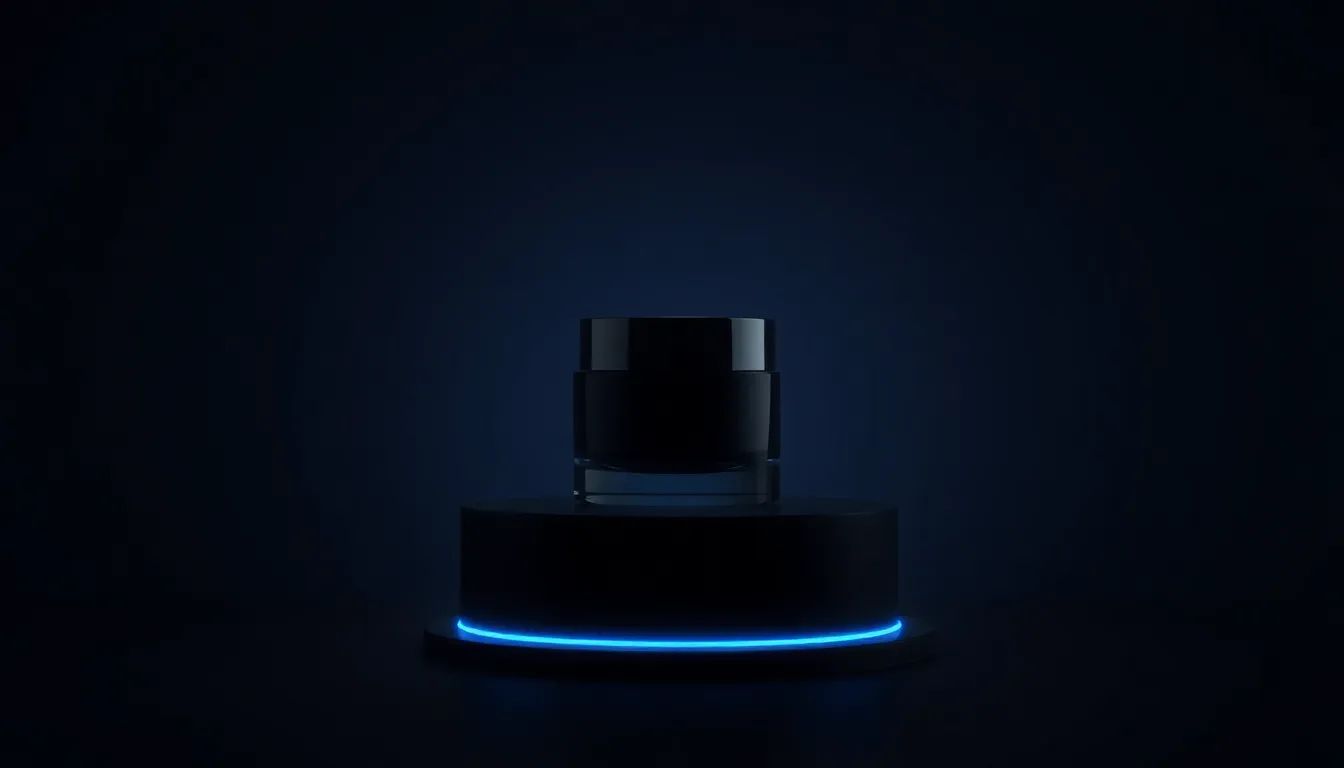
Step up from a bare model to a finished piece, and the tier changes. A cosmetics brand wanting a polished hero video of a cream jar or a serum bottle, fully lit, fully rendered, ready to publish, sits here. Dustin Hill's own showcase reel for a skincare line in this tier shows the range possible inside a single object: a wine-tinted glass jar, a frosted-matte variant with a polished metal lid, a dropper bottle with a genuinely liquid-looking fill. One object, several distinct materials, a complete finished film built entirely inside a computer, including the podiums and backdrops it sits on.
Singapore benchmark: SGD 8,000 to 12,000, model and render as a finished piece. This is the tier most FMCG and cosmetics briefs land in, and it is the clearest entry point for a brand that wants a hyper-real product film without a physical shoot day.
Tier 3: a complex multi-part model, or a full environment
Two different jobs sit at this top tier, and they get there by two different routes.
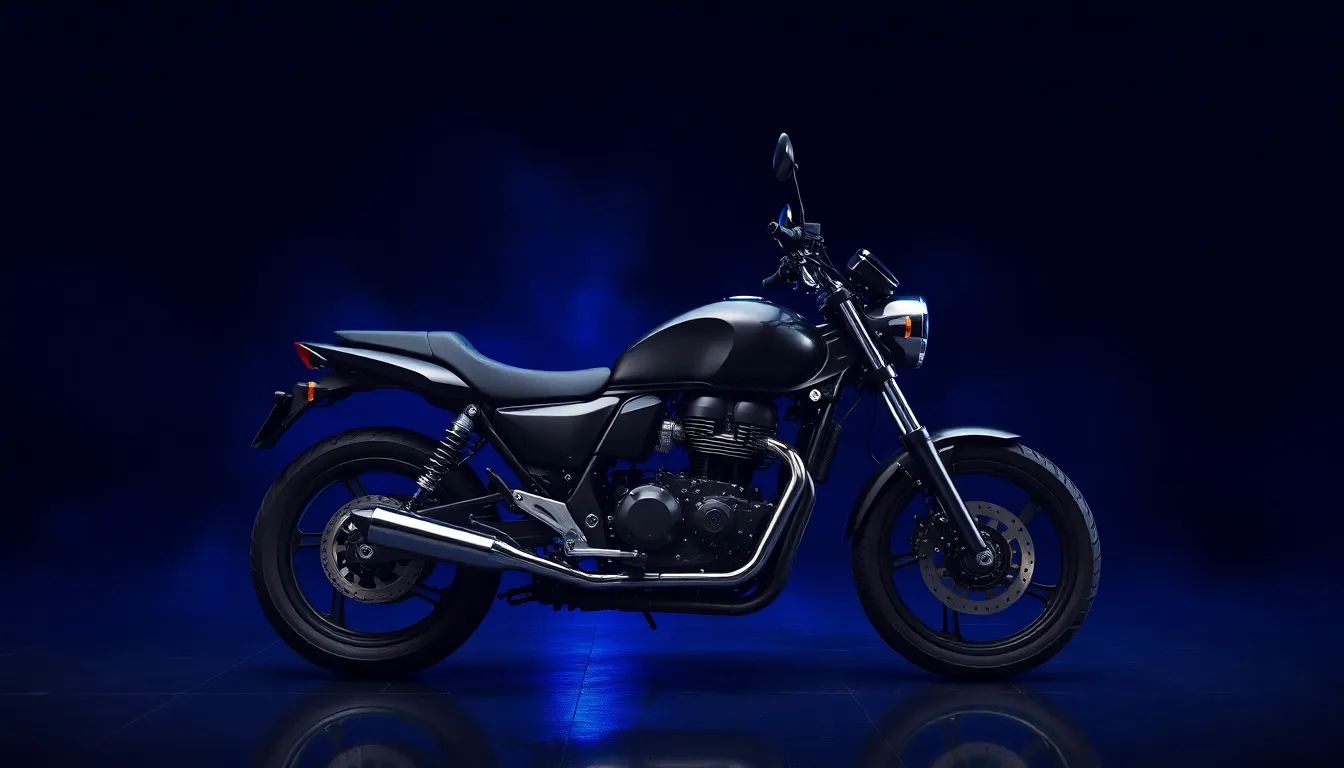
The first route is part count. A motorcycle with a modelled engine, brake calipers, chain drive, and cockpit dash is not one object, it is hundreds of them, each carrying its own material: automotive paint with a clear coat, brushed metal, anodized fittings, rubber tyre tread. Dustin Hill's own motorcycle showcase reel exists specifically to make this visible, closing on a full wireframe pass that shows the model underneath the render. It is the clearest side-by-side proof that complexity, not runtime, is what moves the price.
Singapore benchmark: SGD 30,000 to 40,000, model and render as a finished piece.
The second route is environment. Placing one product inside a fully built, hyper-real space, a museum interior, an airport terminal, an exhibition hall, means the deliverable is no longer the product. It is the space. Dustin Hill built a branded exhibition environment for a launch event this way: an architectural shell, a staged demo area, lighting rigs, and themed props, all built and lit as a walkthrough rather than a single hero shot. A spoon placed inside a museum is not a spoon job anymore. It is a museum job with a spoon in it.
Singapore benchmark: SGD 20,000, environment build as a finished piece, including render.

Development-only versus all-in: the distinction that changes everything
Every number above splits along one line, and missing it is the single most common reason a first-time 3D buyer feels blindsided by a quote.
Tier 1 is development only. The model exists, and it can be reused, re-lit, or re-rendered later, but no finished film comes out of that stage. Tiers 2 and 3 are all-in: a finished piece, modelled and rendered, ready to publish. A client comparing a tier 1 number against a tier 2 number is not comparing like with like. One is a foundation. The other is a finished building.
This is also where a 3D build starts to pay for itself in a way a live shoot never does. Once the model exists, the same asset can be re-lit, restaged, or placed in a new scene for a fraction of the original build cost. A live product shoot gives one angle, once. A 3D model, once built, can be reused indefinitely. The upfront number is higher for a reason, and that reason keeps paying out on every future request that reuses the same asset.
Reading the bands before the call
Singapore 3D development bands, first-party benchmarks from Dustin Hill Productions.
- Single product, development only, for example a packaged consumer item or one hero object: no render included, SGD 2,000 to 6,000.
- Hyper-real product, finished piece, for example a cosmetics or skincare hero film: model and render included, SGD 8,000 to 12,000.
- Complex multi-part model, finished piece, for example a vehicle with modelled interior and moving parts: model and render included, SGD 30,000 to 40,000.
- Environment build, finished piece, for example a branded exhibition or event space: environment and render included, approximately SGD 20,000.
Two things move a project between tiers. What the model actually contains, spoon or car-with-interior, and what it renders into, a bare studio background or a fully built environment. Duration matters too: a longer finished film costs more to render than a short one, independent of the model itself. None of this is a rate anyone can quote from a headline alone, which is exactly why the conversation matters more than the number.
What this means for your budget conversation
A comms head walking into a 3D conversation with these bands in hand can already tell which tier their brief is likely to land in, and can ask sharper questions from the first call: is this development only or a finished piece, is there an environment involved or a clean background, how many parts does the object actually have. Those questions get a scoped quote back faster and closer to the real number than a vague request for a 3D video ever will.
For a closer look at what each tier actually delivers, from a single hero object to a full environment build, Dustin Hill has mapped what each budget tier gets you in more detail.
The range exists to make the first conversation useful, not to replace it. Every project Dustin Hill has built, from a single serum bottle to a full exhibition environment, started as a five-minute scoping call about 3D development. Bring the brief, and the band above becomes a real number fast.